What Is Lifestyle Creep, and How Do You Avoid It?
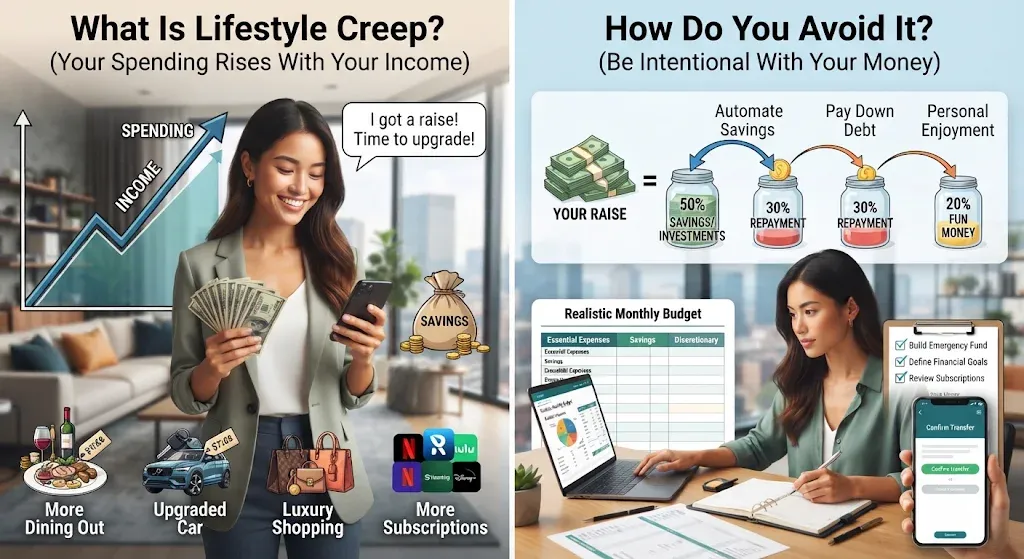
Lifestyle creep, also called lifestyle inflation, is when your spending rises as your income rises, leaving you with little or no extra savings despite earning more. It happens gradually, through small upgrades like pricier subscriptions, dining out, and newer gadgets, and it can be avoided by deciding in advance how to use each raise.
As your income grows, it is natural to want to enjoy a more comfortable lifestyle. You might start eating out more often, upgrade your phone, move into a nicer apartment, or spend more on holidays and entertainment. While these changes may seem like well-earned rewards for your hard work, they can gradually become expensive habits that are difficult to maintain.
This phenomenon is known as lifestyle creep, and it can prevent you from building savings, paying off debt, and achieving long-term financial goals, even when you earn considerably more than you did a few years ago.
Understanding how lifestyle creep works and recognizing its early warning signs can help you enjoy the benefits of a higher income without sacrificing your financial security.
What Is Lifestyle Creep?
Lifestyle creep, sometimes called lifestyle inflation, happens when your spending increases as your income rises. Instead of putting additional earnings toward savings, investments, or debt repayment, you gradually spend more on everyday comforts, convenience, and luxury purchases.
For example, imagine someone receives a salary increase of $800 per month. Initially, this extra income could help build an emergency fund or increase retirement contributions. However, the person might decide to lease a more expensive car, subscribe to additional streaming services, eat at restaurants more frequently, and purchase designer clothing.
Individually, these expenses may seem manageable. Together, however, they can absorb most or all of the additional income.
The problem is not necessarily spending more money. After all, earning more should give you greater financial flexibility. The concern arises when higher spending becomes the new normal, leaving little room to save or prepare for unexpected expenses.
Common Signs of Lifestyle Creep
Lifestyle creep often develops gradually, making it difficult to recognize until your monthly expenses have increased significantly. Some common warning signs include:
1. Your savings are not growing with your income
If you receive a raise or promotion but your savings account balance remains unchanged, your spending habits may be absorbing the additional money.
2. You regularly upgrade things that still work
Replacing a perfectly functional phone, car, television, or household appliance simply because a newer model is available can become an expensive habit.
3. Your monthly subscriptions keep increasing
Streaming platforms, premium applications, gym memberships, delivery services, and other recurring expenses can accumulate over time. Small monthly payments may seem insignificant individually, but their combined cost can affect your budget.
4. You spend more on convenience
Ordering food instead of cooking, taking taxis instead of public transportation, and paying for services you previously handled yourself can make life easier. However, frequent convenience spending can gradually increase your monthly expenses.
5. You feel that your current lifestyle is no longer enough
One of the more subtle signs of lifestyle creep is becoming accustomed to a higher standard of living. Things that once felt like special treats may eventually become everyday expectations.
Why Does Lifestyle Creep Happen?
Several psychological and financial factors contribute to lifestyle inflation.
Higher income creates higher expectations. When people earn more, they often begin to believe that they should live more comfortably. A larger home, a newer car, or more expensive holidays can start to feel like natural rewards for professional success.
Social comparison influences spending. Seeing friends, colleagues, or social media personalities enjoying expensive lifestyles can create pressure to keep up. People may spend money on things they do not particularly need simply to maintain a certain image.
Small purchases become habits. Lifestyle creep does not always involve major purchases. Frequent restaurant visits, premium coffee, online shopping, and upgraded services can gradually become part of an ordinary spending routine.
Convenience becomes a priority. As income increases, people may become more willing to pay for services that save time and effort. Although some of these expenses are worthwhile, they can become problematic when they are not monitored.
Recognizing these influences is an important first step toward making more intentional financial decisions.
How to Avoid Lifestyle Creep
Avoiding lifestyle creep does not mean denying yourself every pleasure or refusing to enjoy the money you earn. The goal is to create a balance between enjoying the present and protecting your financial future.
Here are several practical strategies that can help.
1. Give Every Pay Raise a Purpose
Before spending additional income, decide how much will go toward savings, investments, debt repayment, and personal enjoyment.
For example, if your monthly income increases by $500, you could divide the additional amount as follows:
- $250 toward savings or investments.
- $150 toward debt repayment or other financial goals.
- $100 for personal spending and enjoyment.
This approach allows you to benefit from higher earnings while ensuring that your financial priorities receive attention.
2. Build an Emergency Fund
An emergency fund provides financial protection when unexpected expenses arise, such as medical bills, car repairs, home maintenance, or temporary unemployment.
Ideally, aim to save three to six months of essential living expenses, although the appropriate amount depends on your circumstances and income stability.
Consider directing part of every salary increase toward this fund until you reach your target.
Having accessible savings can reduce financial stress and prevent you from relying on credit cards or loans when something unexpected happens.
3. Follow a Realistic Monthly Budget
A budget helps you understand where your money goes and identify spending patterns that may otherwise go unnoticed.
Start by listing your essential expenses, including housing, utilities, groceries, transportation, insurance, and debt payments. Then account for discretionary spending, savings, and financial goals.
Review your budget regularly, especially after receiving a raise or changing jobs.
The purpose is not to restrict every purchase but to make sure your spending reflects your priorities.
4. Avoid Upgrading Everything at Once
A higher income does not mean every aspect of your lifestyle needs an immediate upgrade.
If your current car works well, there may be little reason to replace it. If your phone meets your everyday needs, purchasing the newest model may not provide enough value to justify the expense.
Before making a significant purchase, consider whether it genuinely improves your quality of life or whether you simply want something newer or more expensive.
Waiting a few days before committing to a nonessential purchase can also help prevent impulsive spending.
5. Automate Your Savings
One of the simplest ways to prevent lifestyle creep is to save money before you have an opportunity to spend it.
Set up automatic transfers to a savings account shortly after receiving your salary. You can also automate retirement contributions or regular investment deposits, depending on your financial situation.
When saving becomes part of your routine, you are less likely to treat all your available income as money that can be spent.
6. Be Careful With Recurring Expenses
Recurring payments deserve particular attention because they can quietly increase your monthly financial commitments.
Review your subscriptions, memberships, insurance policies, and other regular payments every few months.
Cancel services you rarely use, compare available plans, and avoid paying for premium features that do not provide meaningful value.
Even eliminating a few unnecessary monthly expenses can free up money for more important financial goals.
7. Define What Financial Comfort Means to You
Perhaps the most effective way to avoid lifestyle creep is to understand what a comfortable life actually means to you.
For some people, financial comfort means owning a home without a mortgage. For others, it means having enough savings to retire comfortably, traveling occasionally, spending time with family, or working fewer hours.
When you have clearly defined priorities, you are less likely to spend money simply because your income allows you to do so.
Is Lifestyle Inflation Always Bad?
Not necessarily. Increasing your spending as your income grows can be a reasonable financial decision, particularly when it improves your health, security, or overall quality of life.
For example, moving into a safer neighborhood, buying healthier food, improving your home, or paying for reliable childcare may represent worthwhile investments in your well-being.
Similarly, spending more on experiences, travel, hobbies, and time with loved ones can make life more enjoyable.
The distinction lies in whether increased spending is intentional and financially sustainable.
Healthy lifestyle inflation means choosing improvements that genuinely matter to you while continuing to save and prepare for the future. Uncontrolled lifestyle creep occurs when spending increases automatically, without considering its long-term consequences.
Final Thoughts
Earning more money should create opportunities, not simply introduce new financial obligations. Yet without a clear plan, higher income can easily lead to higher expenses, leaving you in the same financial position despite years of professional progress.
The key to avoiding lifestyle creep is to make conscious decisions about how you use additional income. Prioritize savings, maintain a realistic budget, avoid unnecessary upgrades, and spend more on things that genuinely improve your life.
Ultimately, financial freedom is not determined by how much money you earn or how expensive your lifestyle becomes. It is about having the flexibility to make choices without constantly worrying about your next paycheck.
Frequently Asked Questions About Lifestyle Creep
Lifestyle creep happens when your spending increases as your income grows. Instead of saving the extra money you earn, you gradually spend more on things like dining out, shopping, entertainment, and expensive purchases.
An example is someone receiving a salary increase and immediately upgrading their car, moving into a more expensive apartment, and spending more on restaurants and holidays. Although their income has increased, their expenses rise at the same time, leaving little additional money for savings.
Yes. Lifestyle creep and lifestyle inflation generally describe the same financial behavior: increasing spending as income increases. Both terms refer to gradually adopting a more expensive lifestyle as your earnings grow.
No. Spending more on things that improve your quality of life, health, or financial security is not necessarily a problem. Lifestyle creep becomes harmful when increased expenses prevent you from saving money, managing debt, or achieving important long-term financial goals.
Start by deciding how to allocate your additional income before spending it. Direct part of your raise toward savings, investments, or debt repayment, and set aside a reasonable amount for personal enjoyment. Maintaining a budget, automating savings, and avoiding unnecessary upgrades can also help prevent lifestyle creep.
Sources
- Investopedia – Lifestyle Inflation: Definition, Examples, and How to Avoid It
- NerdWallet – Lifestyle Inflation: What It Is and How to Avoid It
- Bankrate – Lifestyle Creep: What It Is and How to Avoid It
- CNBC Select – How Lifestyle Inflation Can Affect Your Financial Goals
- Consumer Financial Protection Bureau (CFPB) – Budgeting and Saving Resources
Related posts:
 How to Stop Overthinking and Feel Calmer
 TikTok-Famous Food Trends: Viral Recipes and Kitchen Hacks That Took Over 2025
 Making Mistakes Safely: The Smarter Way to Learn Trading with Quotex
 Is the Traditional Classroom Model Still Relevant in the Age of Hybrid Learning?
 Smart Borrowing: Tips for Choosing an Auto Loan You Can Afford