Is Sitting All Day Really That Bad for You?
TL;DR
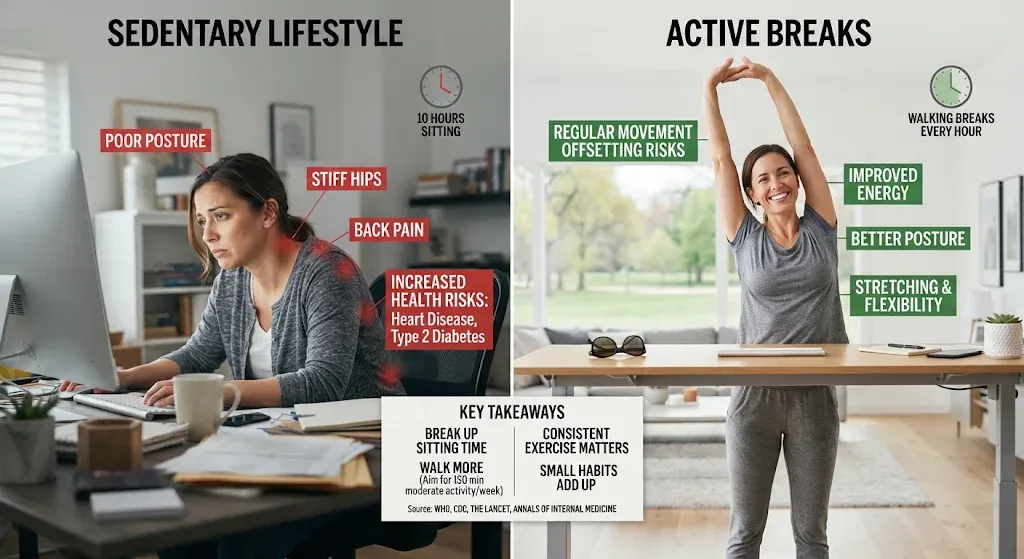
Sitting for long stretches is linked to higher risks of heart disease, type 2 diabetes, and early death, but the danger is not as simple as “sitting is the new smoking.” Regular movement can offset much of the risk. The most practical fix is to break up long sitting periods, walk more, and build some moderate exercise into your week.
You have probably seen the headline: sitting is killing you. If you work at a desk, drive a lot, or unwind on the couch, that can feel alarming. So is sitting all day really that bad for you? The honest answer is that it can be harmful, but the risk depends on how much you sit, how you break it up, and how active you are the rest of the time.
What counts as sedentary behavior?
Researchers use the term “sedentary behavior” for waking activities that use very little energy while you are sitting, reclining, or lying down. Working at a computer, commuting, watching TV, and scrolling on your phone all count.
This is different from simply not exercising. A person can hit the gym for 30 minutes and still spend the other 10 hours of the day in a chair. Both habits matter, and they affect your health in different ways.
Why sitting too much can harm your health
Large reviews of research have linked long periods of sitting to a higher risk of several health problems, including:
- Cardiovascular disease. Long sitting time is associated with a higher risk of heart disease.
- Type 2 diabetes. Muscles that stay inactive use less glucose, which can affect blood sugar control.
- Weight gain. Sitting burns fewer calories than standing or moving, which makes weight gain easier over time.
- Some cancers. Some studies find associations, although the evidence is less consistent.
- Early death. Higher sedentary time is linked to a higher risk of dying earlier from any cause.
Prolonged sitting may also contribute to stiff hips, tight shoulders, back and neck pain, and poor posture. And while sitting itself does not cause low mood, a very inactive routine is often associated with lower energy and worse mental well-being.
Is sitting really “the new smoking”?
Not quite. The comparison makes a catchy headline, but it overstates the evidence. Smoking carries a much larger and more direct health risk.
Most evidence on sitting comes from observational studies, which can show links but cannot prove cause and effect. People who sit a lot may also differ in diet, income, sleep, and existing health conditions. Researchers try to account for these factors, but they cannot remove them completely.
The better takeaway is this: too much sitting is a genuine risk factor, but it is one you can manage.
Exercise can offset much of the risk
Here is the encouraging part. Research suggests that physical activity can reduce a large share of the risk linked to sitting. A large analysis published in The Lancet found that people who sat for long periods but did a high level of moderate activity each day had a much lower mortality risk than inactive sitters. The effect was strongest in people who were active for roughly an hour a day.
That level of activity sounds like a lot, but it includes brisk walking, cycling, and other ordinary movement, not just formal workouts. Public health guidelines, including those from the World Health Organization, recommend that adults get at least 150 minutes of moderate-intensity activity per week and also limit time spent sitting.
If you are already working on a walking habit, you are doing something right. If you are not sure where to start, our guide on how to build a walking habit that sticks is a good first step, and you can also read whether 10,000 steps a day is a myth.
Breaking up your sitting time matters
It is not only how much you sit but how long you sit without interruption. Some research suggests that long, unbroken sitting bouts are more harmful than the same total time broken into shorter periods.

Simple ways to break it up:
- Stand up every 30 to 60 minutes. Set a phone or watch reminder.
- Take walking breaks. Even a two- or three-minute walk can help.
- Take calls standing or walking. This turns passive time into active time.
- Use a sit-stand desk if you have one. Alternating positions is better than standing all day.
- Stretch regularly. Gentle movement can ease stiffness in the hips, back, and shoulders.
Standing all day is not the answer either. Standing for very long periods can cause its own problems, like tired legs and back strain. The goal is variety, not a new fixed position.
Practical ways to sit less without changing your life
You do not need a dramatic overhaul. Small changes add up:
- Walk after meals. A short stroll fits easily into a daily routine.
- Choose the stairs when it is practical.
- Move during TV time. Stretch, fold laundry, or stand during commercials or between episodes.
- Schedule walking meetings when possible.
- Park farther away or get off public transport one stop early.
- Keep water nearby. Refilling it gives you a natural reason to get up. Our article on whether you really need 8 glasses of water a day explains how much you actually need.
Who should be especially careful?
People with desk jobs, long commutes, limited mobility, or conditions that make movement difficult may spend most of their day seated. Older adults and people with chronic health conditions may also be more vulnerable to the effects of inactivity. If you have a medical condition or pain that limits movement, talk to a healthcare professional about safe ways to stay active.
Final Thoughts
So, is sitting all day really that bad for you? Yes, spending long, uninterrupted hours in a chair can raise your risk of health problems, especially if you are also inactive the rest of the time. But it is not a sentence you cannot escape. Regular movement, short breaks, and consistent exercise can reduce much of the harm.
You do not need a perfect routine. Start by standing up more often, walking a little more each day, and treating movement as part of your normal schedule rather than a separate chore. For more practical guides on health, habits, and everyday wellbeing, visit Quotela.
Key Takeaways
- Long periods of sitting are linked to higher risks of heart disease, type 2 diabetes, weight gain, and early death.
- Sitting is not literally “the new smoking,” and much of the evidence is observational.
- Regular physical activity can offset a large share of the risks linked to sitting.
- Breaking up long sitting periods with short movement breaks may help.
- Standing all day is not a perfect solution; varying your position and moving is better.
- Small habits like walking after meals, taking calls on foot, and using the stairs add up.
- Public health guidelines recommend at least 150 minutes of moderate activity per week.
- People with health conditions should talk to a professional before changing their activity level.
Frequently Asked Questions
There is no single cutoff. Research generally links higher daily sitting time with higher health risks, especially when there is little physical activity. Sitting less and moving more throughout the day is the safest approach.
Exercise can offset much of the added risk, particularly when activity levels are high. However, it is still beneficial to break up long sitting periods rather than relying on a single workout.
Many experts suggest standing or moving for a few minutes every 30 to 60 minutes. Even a short walk or stretch can help.
A standing desk can help you vary your posture, but standing for hours is not ideal either. Alternating between sitting, standing, and moving is generally the best approach.
Long, static sitting, especially with poor posture, can contribute to stiffness and back pain for some people. Regular movement, good seating, and strengthening exercises may help.
Walking is one of the easiest ways to counter long sitting time. Short walks throughout the day and regular longer walks both help.
Sources
- World Health Organization (WHO) – Guidelines on Physical Activity and Sedentary Behaviour (2020)
- Centers for Disease Control and Prevention (CDC) – Physical Activity Basics
- U.S. Department of Health and Human Services – Physical Activity Guidelines for Americans
- Annals of Internal Medicine – Biswas et al., Sedentary Time and Its Association With Risk for Disease Incidence, Mortality, and Hospitalization in Adults (2015)
- NHS – Why sitting too much is bad for us
- Ekelund et al., The Lancet (2016), “Does physical activity attenuate, or even eliminate, the detrimental association of sitting time with mortality?
Disclaimer
This article is for informational and educational purposes only and should not be considered medical advice. Always consult a qualified healthcare professional before changing your exercise routine or if you have concerns about your health.