How to Build a Walking Habit That Sticks
Building a walking habit starts with setting a realistic daily goal, choosing a consistent time, and connecting walking to an existing routine. Beginners can start with just 10 minutes a day and gradually increase their walking time as the activity becomes part of their lifestyle. Consistency is more important than speed or distance when establishing a sustainable walking routine.
Walking is one of the simplest forms of exercise. It needs no gym membership, no special equipment, and no particular skill. Yet many people start a walking routine with great intentions and drop it within a couple of weeks.
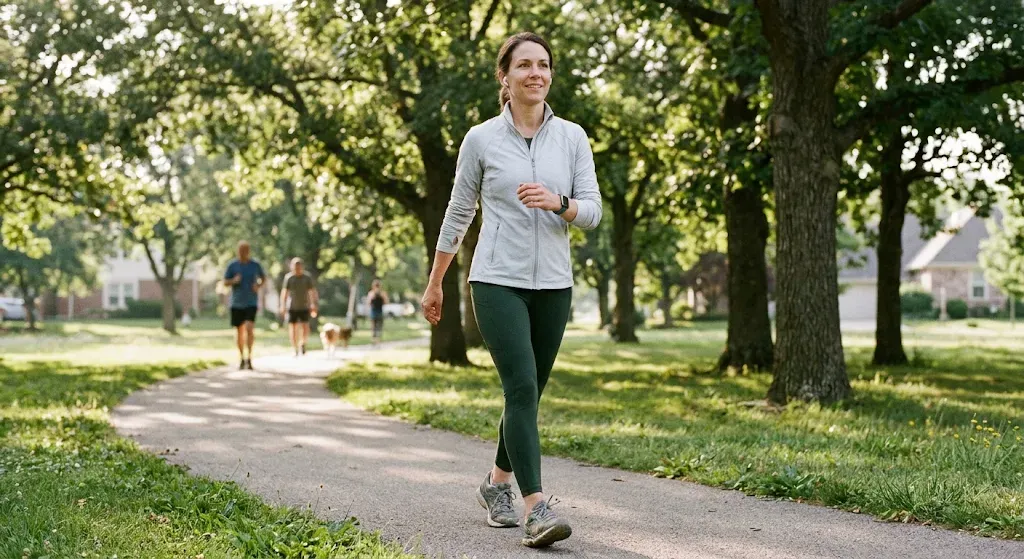
The problem is rarely willpower. It’s usually the way the habit was set up. This guide explains why walking is worth the effort and how to build a routine you’ll keep.
Why Walking Is Worth Making a Habit
Regular walking is linked to a range of benefits:
- Heart health: Moderate activity like brisk walking supports cardiovascular fitness.
- Mood and stress: Many people find a short walk lifts their mood and clears their head.
- Energy and sleep: Daily movement, especially in daylight, can support better sleep.
- Weight management: Walking burns calories and is easy to sustain, which matters more than intensity.
- Joint-friendly movement: It’s low-impact, so it suits a wide range of ages and fitness levels.
Major health organizations, including the WHO, recommend at least 150 minutes of moderate activity per week (up to 300 for added benefits), which works out to roughly 30 minutes, five days a week.
1. Start Smaller Than You Think You Should
The biggest mistake new walkers make is setting an ambitious goal, like an hour every day, then quitting after the first missed day.
Instead, begin with a goal so small it feels almost too easy. Ten minutes a day is plenty. Once walking feels automatic, you can extend it. Consistency builds the habit, and distance and speed can come later.
2. Attach Walking to Something You Already Do
Habits form most easily when they’re linked to an existing routine. This is sometimes called “habit stacking.” Some examples:
- Walk for 10 minutes right after your morning coffee.
- Take a short loop after lunch.
- Walk around the block as soon as you finish work.
- Call a friend or listen to a podcast only while walking.
When walking follows a reliable cue, you stop having to decide whether to do it.
3. Schedule It Like an Appointment
“I’ll walk when I have time” usually means you won’t. Put your walk in your calendar, or set a daily reminder. Pick a time that fits your life realistically, not the time you wish you had.
Some people do best with morning walks before the day gets busy. Others prefer an evening walk to unwind. The best time is the one you’ll actually keep.
4. Make It Enjoyable
If walking feels like a chore, it won’t last. Look for ways to make it something you look forward to:
- Save a favorite podcast, audiobook, or playlist for walking time only.
- Walk with a friend, partner, or pet. Social commitments are hard to skip.
- Vary your route. Explore parks, neighborhoods, waterfronts, or trails.
- Treat it as thinking time. Many people find walking helps them solve problems or come up with ideas.
5. Set Yourself Up for Success
Remove small obstacles that give you excuses to skip a day.
- Keep comfortable shoes by the door.
- Prepare for weather. Have a rain jacket, an umbrella, or warm layers ready.
- Plan an indoor backup, such as walking laps in a mall or on a treadmill.
- Choose a few reliable routes so you never have to decide where to go.
6. Track Your Progress (But Don’t Obsess)
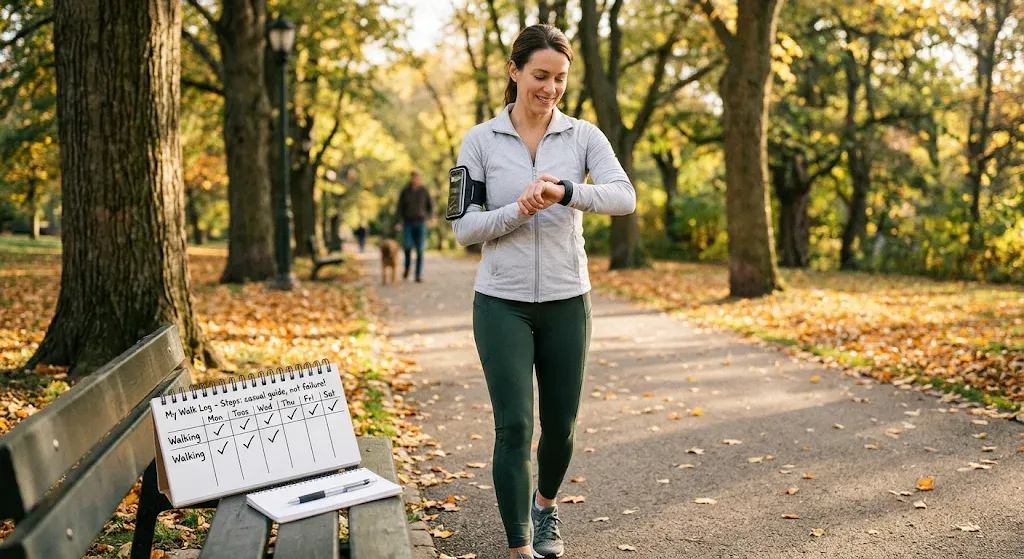
Seeing your progress can be motivating. A phone’s built-in step counter, a fitness tracker, or even a paper calendar where you mark each walking day can all work.
A word of caution: you don’t need to hit 10,000 steps a day. That number comes from marketing, not strict science. Research suggests meaningful health benefits begin well below 10,000 steps, so treat step goals as a guide, not a pass-or-fail test.
7. Don’t Let One Missed Day Become a Missed Month
You will miss days. Illness, travel, bad weather, and busy weeks happen to everyone. What matters is how you respond.
Studies on how habits form show that missing a single day doesn’t noticeably derail the process.
Follow a simple rule: never miss twice in a row. If you skip Monday, walk on Tuesday, even if it’s only for five minutes. This keeps a small slip from turning into a full stop.
8. Increase Gradually
Once walking feels routine, you can build on it:
- Add five minutes to your walk each week.
- Pick up your pace for short intervals.
- Include hills or stairs.
- Try longer weekend walks or hikes.
Increase your effort slowly so you stay motivated and avoid soreness or injury.
9. Remind Yourself Why You’re Doing It
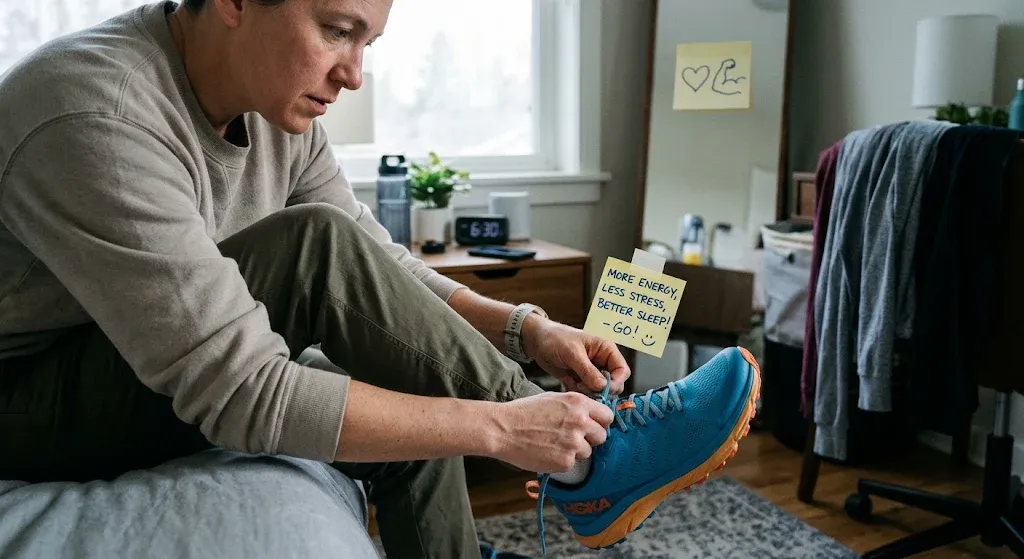
On days when motivation is low, it helps to remember your reasons. Maybe you want more energy, less stress, better sleep, or improved fitness. Write your reason down or keep it as a note on your phone. Connecting your walk to something you care about makes it easier to lace up your shoes.
A Simple 4-Week Plan to Get Started
| Week | Goal |
|---|---|
| Week 1 | Walk 10 minutes a day, at the same time each day |
| Week 2 | Increase to 15 minutes, five days a week |
| Week 3 | Aim for 20 minutes, adding a more varied route |
| Week 4 | Reach 25-30 minutes on most days, with one longer walk |
Adjust the plan to your own pace. The goal is steady progress, not perfection.
Final Thoughts
Building a walking habit isn’t about intensity or perfection. It’s about making movement an easy, enjoyable part of your day. Start small, anchor your walks to existing routines, remove obstacles, and be forgiving when life gets in the way.
A few minutes a day, repeated consistently, adds up to a habit that supports your health for years.
Frequently Asked Questions
Beginners can start with 10 minutes of walking per day and gradually increase the duration as their fitness and confidence improve.
Yes. Walking for 30 minutes on most days can help adults work toward the recommended 150 minutes of moderate-intensity physical activity per week.
The best time is the one that fits your schedule and allows you to walk consistently. Morning, lunchtime, and evening walks can all be effective.
There is no fixed timeline. It depends on the individual, the consistency of the routine, and how easily walking fits into everyday life.
No. Beginners do not need to reach 10,000 steps immediately. Starting with a manageable daily goal and gradually increasing activity is a more sustainable approach.
Sources
- World Health Organization. Physical activity (fact sheet).
- Bull FC, et al. “World Health Organization 2020 guidelines on physical activity and sedentary behaviour.” British Journal of Sports Medicine, 2020.
- Lally P, et al. “How are habits formed: Modelling habit formation in the real world.” European Journal of Social Psychology, 2010.
- Paluch AE, et al. “Daily steps and all-cause mortality: a meta-analysis of 15 international cohorts.” The Lancet Public Health, 2022.
- Lee I-M, et al. “Association of step volume and intensity with all-cause mortality in older women.” JAMA Internal Medicine, 2019.
Disclaimer: This article is for general information only and is not medical advice. If you have a health condition or haven’t been active for a long time, talk to your doctor before starting a new exercise routine.
Related posts:
 Which Vitamin is Most Effective for Hair? The Best Supplements for Stronger Growth
 LIFEPAK: A Lifesaving Defibrillator Series That Changed Emergency Medicine
 10 Ways to Deal with Your Stress Without Turning to Alcoholic Drinks
 Is Hizzaboloufazic Good or Bad? What You Should Know Before Trusting the Trend
 Do-Si-Dos: Why Do Colorado Tokers Love This Strain?