Habit Tracker App Review: What Actually Helps
You do not need another app that cheers you on for three days and then quietly joins the graveyard of forgotten downloads. A good habit tracker app review should answer a simpler question: will this tool help you keep showing up when motivation drops, or will it just make your home screen look productive?
That is the real test, because most people are not struggling to understand habits. They are struggling to repeat small actions long enough for those actions to matter. The best habit apps support that process. The weaker ones turn consistency into a chore, bury useful data under pretty design, or ask too much setup before you get any value.
Habit tracker app review: what matters most
If you are comparing habit trackers, it helps to ignore the marketing language and focus on behavior. The app is not the habit. It is the support system around the habit. That means the best choice depends less on flashy features and more on how you actually live.
If you like structure, a tracker with detailed schedules, reminders, and streak charts can be genuinely useful. If you get overwhelmed by too many settings, a simpler app may keep you engaged longer. Plenty of people quit a technically impressive app because it feels like another job.
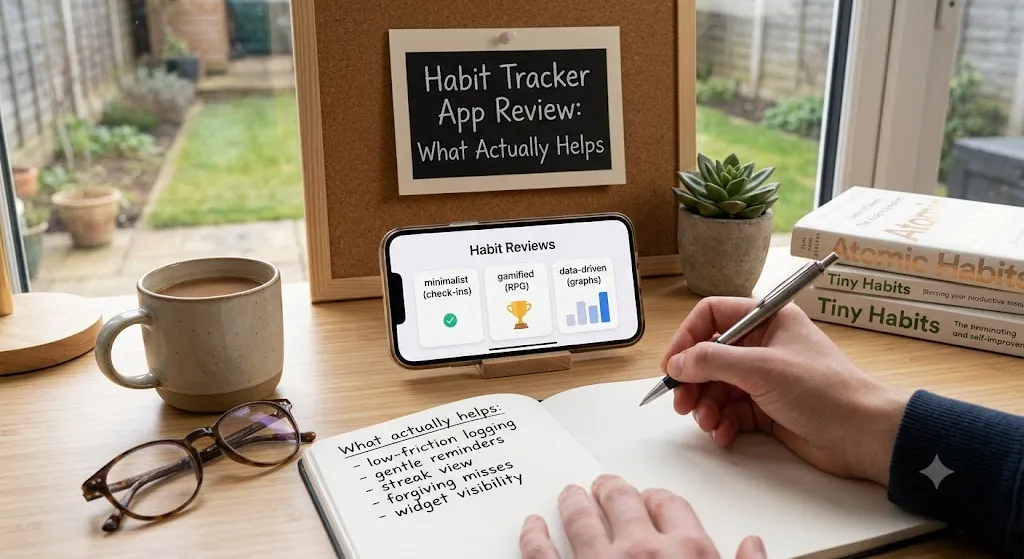
The strongest habit trackers usually get five things right. They make logging fast, they show progress clearly, they let you customize routines without confusion, they send reminders that are helpful rather than annoying, and they give you a reason to come back tomorrow. If an app misses two or three of those, it tends to lose its value quickly.
What separates a good app from a distracting one
A lot of apps look polished on day one. Fewer still hold up after a month. That is why any honest habit tracker app review has to look beyond first impressions.
Speed matters more than inspiration
Many habit apps are full of motivational language, badges, animations, and celebration screens. Some of that can help at the beginning. But if logging a habit takes too many taps, the novelty wears off fast.
The best apps make check-ins almost frictionless. Open the app, mark the habit, move on. That sounds basic, but it is often the difference between daily use and abandonment. If the process feels clunky, your brain starts negotiating with itself, and missed days become easier.
Good data is simple data
Progress charts can be powerful when they are easy to read. You want to know whether you worked out four times this week, meditated more this month than last month, or keep missing your evening reading habit on weekends. You do not need a dashboard that looks like business analytics software.
Useful tracking gives you patterns, not noise. Some apps overload users with graphs that are technically detailed but practically meaningless. Others keep things lean and show exactly what helps you adjust your routine.
Flexibility is a quiet advantage
Not every habit should be tracked in the same way. Drinking water may be a daily target. Going to the gym may be three times a week. Calling your parents might be a recurring reminder every Sunday. A good tracker understands those differences.
This is where many free apps start to feel limited. They handle simple daily streaks well but struggle with habits that follow a more realistic rhythm. If your goals are basic, that may be fine. If your schedule changes often, flexibility becomes more valuable than visual appeal.
Features worth paying attention to
When people search for a habit tracker app review, they often want a winner declared. But there is no single best app for everyone. There are only better fits for certain personalities and routines.
Reminders that feel useful
A reminder can either save your habit or train you to ignore notifications. Timing, tone, and frequency matter. The best apps let you tailor reminders to your day rather than forcing a standard schedule.
For example, a morning stretch prompt at 7:00 a.m. works for some people and annoys others. If the app cannot adjust to your real life, it starts becoming background noise. Smart reminders support the habit without nagging you into switching them off.
Streaks: motivating, but not magic
Streaks are one of the most common selling points in habit apps, and they can work well. Seeing a run of successful days creates momentum. Nobody likes breaking a chain.
Still, streaks have a downside. They can make one missed day feel bigger than it is. Some users get discouraged after a break and stop entirely because the perfect record is gone. Better apps soften that problem with weekly goals, completion rates, or recovery options that encourage consistency instead of perfection.
Notes and context
This feature gets overlooked, but it matters. If you can add a quick note to a habit entry, you get context that a check mark alone cannot provide. Maybe you missed your workout because you were traveling. Maybe your focus habit went better on days you slept earlier.
That extra layer turns tracking into learning. Without it, you may know what happened but not why.
Cross-device syncing and widgets
These are not glamorous features, yet they can make daily use much easier. If the app syncs cleanly across devices, you are more likely to trust it. If it offers a widget or home screen shortcut, your habits stay visible instead of buried.
Visibility matters because habits are often lost in the gap between intention and action. A simple visual cue can be more effective than a detailed goal-setting screen.
Free vs paid: is premium worth it?
This depends on how serious you are and how complex your routines are. Free habit trackers are often enough for someone building two or three simple daily habits. If all you need is a clean checklist and a reminder, paying may not change much.
Premium plans usually add advanced stats, unlimited habits, custom schedules, better widgets, deeper reports, and sometimes integrations with calendars or health data. Those upgrades can be worth it if you are already committed and want better insight. They are not worth it if you are still testing whether you will use the app at all.
A practical rule is this: start free if possible, use it for two or three weeks, then decide. Paying upfront for motivation rarely works. Paying for convenience after you already have momentum makes more sense.
Who should use a habit tracker app?
Habit trackers are especially helpful for people who like visible progress and gentle structure. If you respond well to checking boxes, watching streaks build, and seeing patterns over time, an app can be a strong support tool.
They are also useful for people trying to make small changes in busy schedules. Professionals, students, entrepreneurs, and anyone juggling multiple priorities often benefit from getting habits out of their head and into a system.
But apps are not ideal for everyone. If constant tracking makes you feel pressured, you may do better with a calendar, paper journal, or one simple recurring reminder. Some people build habits faster when they remove digital friction instead of adding another layer of it. That is not failure. It is fit.
Common mistakes people make after downloading one
The first mistake is tracking too many habits at once. It feels ambitious, but it usually creates fatigue. Starting with two or three meaningful habits is far more effective than trying to rebuild your whole life in one week.
The second mistake is choosing habits that are too vague. Trackers work best with actions you can clearly complete, such as walk 20 minutes, read 10 pages, or drink two bottles of water. A habit like be healthier sounds good but is difficult to measure.
The third mistake is treating the app as accountability by itself. The tool can remind you, record progress, and highlight patterns. It cannot decide for you at 6:30 a.m. whether you will get up and do the thing. That part still belongs to you.
Quotela readers tend to appreciate tools that make growth feel more doable, and that is where the right habit app earns its place. Not by promising a new identity overnight, but by making repetition easier on ordinary days.
Final take on any habit tracker app review
The best habit tracker is not the one with the most features. It is the one you will still use when life gets messy, your energy dips, and your goals stop feeling exciting. Look for speed, clarity, flexibility, and reminders that fit your routine. Be honest about whether you want insight or just encouragement.
A good app can help you stay consistent. A great one almost disappears into your day, leaving the habit itself to take center stage. Choose the tool that makes showing up feel simpler, and let that simplicity do the heavy lifting.
Conclusion: The Right Habit Tracker Should Make Consistency Easier
A habit tracker app is only valuable if it helps you take action after the initial excitement fades. The best apps do not replace discipline or motivation; they create a simple system that makes progress easier to see and maintain. Whether you prefer a detailed tracker with advanced features or a minimal app with quick check-ins, the right choice is the one that matches your lifestyle.
Before paying for premium features or chasing the most popular app, focus on what actually supports your routine: easy tracking, useful reminders, clear progress, and flexibility. A habit tracker should reduce friction, not add another task to your day. When the tool fits your habits instead of fighting against them, small daily actions become easier to repeat—and those repeated actions are what create long-term change.
Key Takeaways
- The best habit tracker app is the one you will continue using after the first few days.
- Simple check-ins and clear progress often matter more than flashy features.
- Free apps can be enough for basic habits, while premium features help with advanced tracking.
- Avoid tracking too many habits at once; start with a few meaningful goals.
- A habit tracker is a support tool, not a replacement for personal commitment.
FAQ
1. What makes a habit tracker app effective?
An effective habit tracker makes it easy to record progress, provides helpful reminders, and shows useful patterns without overwhelming the user.
2. Are free habit tracker apps good enough?
Yes. Many free apps work well for simple routines. Premium versions are more useful for people who want advanced statistics, customization, and extra features.
3. How many habits should I track at once?
Starting with two or three important habits is usually better than tracking too many goals at the same time. A smaller focus makes consistency easier.
4. Can a habit tracker really help build better habits?
A habit tracker can support consistency by creating awareness and structure, but the actual habit still depends on regular action and commitment.
5. Should I choose a simple or feature-rich habit tracker?
Choose based on your personality and routine. A simple app is better if you want quick tracking, while a feature-rich app may suit people who enjoy detailed planning and progress analysis.
Ana Milojevik
About the Author
Ana Milojevik is a writer and contributor at Quotela.net, a general-interest publication covering business, health, technology, travel, personal development, quotes, and digital trends. She enjoys researching practical topics and creating informative content that helps readers discover new ideas, insights, and useful perspectives.
Related posts:
 How to Improve Decision Making Every Day
 TikTok-Famous Food Trends: Viral Recipes and Kitchen Hacks That Took Over 2025
 Making Mistakes Safely: The Smarter Way to Learn Trading with Quotex
 Is the Traditional Classroom Model Still Relevant in the Age of Hybrid Learning?
 Smart Borrowing: Tips for Choosing an Auto Loan You Can Afford