Alternative Coins for Mining: Low-Cost, High-Profit Options in 2026
Mining alternative cryptocurrencies, or altcoins, offers accessible entry points for beginners and pros seeking profits without Bitcoin’s massive competition. These coins prioritize low hardware costs, energy efficiency, and strong ROI potential, especially with electricity rates under $0.10/kWh. The most profitable altcoins to mine in 2026 are Kaspa, Monero, and Ravencoin.
Alternative coins for mining in 2026 are becoming one of the most profitable ways to earn cryptocurrency without investing in expensive Bitcoin mining rigs. Many crypto enthusiasts are now searching for the best altcoins to mine with GPU or CPU to maximize returns while keeping electricity costs low. With the rise of energy-efficient algorithms and ASIC-resistant networks, low-cost altcoin mining offers a practical entry point for beginners and experienced miners alike.
In this guide, we explore the most profitable crypto mining coins, including Kaspa, Monero, and Ravencoin, along with proven strategies to increase ROI and generate consistent passive income from crypto mining.
What Are Altcoins?
Altcoins, short for “alternative coins,” refer to all cryptocurrencies other than Bitcoin, encompassing thousands of digital assets built on diverse blockchains to address Bitcoin’s limitations or introduce new features like faster transactions, smart contracts, privacy enhancements, or specialized use cases.
Emerging after Bitcoin’s 2009 launch—with Namecoin as the first in 2011—altcoins range from established ones like Ethereum and Litecoin to emerging tokens on platforms like ERC-20, often improving scalability, security, or utility for DeFi, NFTs, and more.
While definitions sometimes exclude Ethereum, making altcoins everything beyond the top two, they collectively drive crypto innovation but carry higher volatility and risk compared to Bitcoin.
Why Mine Altcoins Over Bitcoin?
Altcoins like Kaspa and Monero resist ASIC dominance, allowing GPU or CPU setups that cost far less than specialized Bitcoin rigs. Profitability hinges on factors such as network difficulty, coin price, block rewards, and power consumption—tools like WhatToMine help track real-time ROI. In March 2026, rising altcoin prices amid market recovery boost daily earnings for home miners.
Mining altcoins provides a more accessible and potentially lucrative alternative to Bitcoin, thanks to lower entry barriers with GPU or CPU hardware rather than expensive ASICs, enabling home miners to compete effectively. These coins often feature ASIC-resistant algorithms like RandomX (Monero) or kHeavyHash (Kaspa), fostering decentralization while offering higher block rewards and faster transaction times that boost daily payouts in 2026’s recovering market.
| Coin | Algorithm | Hardware | Est. Daily Profit | Key Advantage |
|---|---|---|---|---|
| Kaspa (KAS) | kHeavyHash | GPU/ASIC | $0.50–$2.00 | Highest GPU throughput |
| Monero (XMR) | RandomX | CPU | $0.18–$1.21 | ASIC-resistant privacy |
Additionally, merged mining options (e.g., Litecoin with Dogecoin) and privacy-focused utilities drive steady demand and profitability, especially at electricity costs under $0.10/kWh, with ROI achievable in 6-12 months for efficient setups.
How to Mine Altcoins?
Mining altcoins involves selecting compatible hardware like GPUs for coins such as Ravencoin or Kaspa, CPUs for Monero, or affordable ASICs for Litecoin, then installing mining software like T-Rex or XMRig, joining a pool (e.g., F2Pool or Nanopool) for steady rewards, and configuring your wallet to receive payouts.
Start by assessing electricity costs—aim for under $0.10/kWh—and use profitability calculators like WhatToMine to pick the best coin; build or buy a rig with good cooling (e.g., RTX 4070/4090 setups), connect via Ethernet, launch the software with pool stratum details, and monitor via HiveOS or similar dashboards for optimal hash rates and uptime.
Beginners can expect setup in 1-2 hours: download wallet, register pool account, tweak overclocks for 10-20% efficiency gains, and scale by adding cards as profits roll in, achieving ROI in 6-12 months under favorable 2026 cryptocurrency market conditions.
Top Low-Cost, High-Profit Altcoins
Focus on GPU/CPU-friendly coins with proven profitability. Here’s a comparison based on current 2026 data:
| Coin | Algorithm | Hardware | Est. Daily Profit ($0.10/kWh) | Block Reward | Key Advantage |
|---|---|---|---|---|---|
| Kaspa (KAS) | kHeavyHash | GPU/ASIC | $0.50–$2+ (RTX 4090) | ~3 KAS | Highest GPU throughput; low difficulty entry. |
| Monero (XMR) | RandomX | CPU/GPU | $0.18–$1.21 (Ryzen rig) | ~0.6 XMR | ASIC-resistant; privacy focus keeps value stable. |
| Ravencoin (RVN) | KawPow | GPU | $0.34 to $0.09 (RTX 4070 Ti) | Varies | Asset tokenization; efficient for mid-range cards. |
| Ethereum Classic (ETC) | Etchash | GPU/ASIC | $0.50–$1.50 (multi-GPU) | ~2.5 ETC | PoW persistence; familiar Ethash algo. |
| Litecoin (LTC) | Scrypt | ASIC | $1–$7 (Antminer L7) | 6.25 LTC | Fast blocks; merged mining yields DOGE rewards. |
| Zcash (ZEC) | Equihash | GPU/ASIC | $0.50–$2 (mid-tier ASIC) | 2.5 ZEC | Privacy shields; balanced difficulty. |
Profits fluctuate with market prices—Kaspa leads for raw efficiency, while Monero suits low-power home setups.
Hardware Essentials for Low-Cost Mining
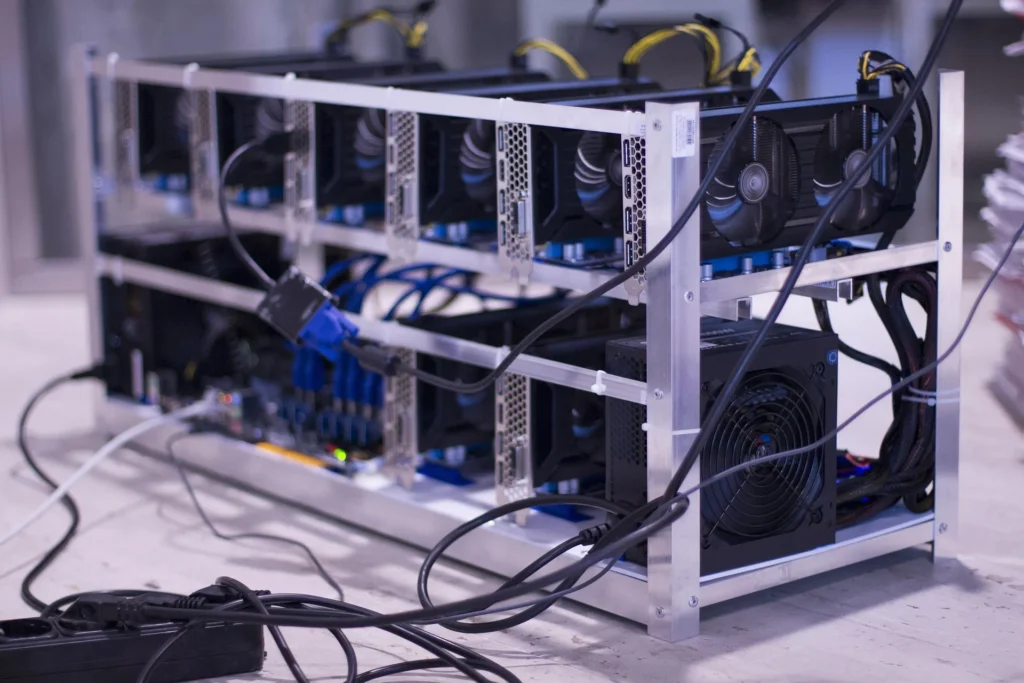
Start with consumer GPUs like NVIDIA RTX 4070 ($500–$700) for 30–40 MH/s on Ravencoin or Kaspa, consuming 200–300W. CPUs such as AMD Ryzen 5000/7000 series excel for Monero at under $400 total build cost. Avoid high-end ASICs unless scaling; immersion cooling cuts electricity by 20% for rigs over 1kW.
Can You Mine Altcoins with Your Laptop?
Yes, you can mine altcoins like Monero (XMR) on a laptop using its CPU or integrated GPU, as these coins use ASIC-resistant algorithms designed for everyday hardware, potentially earning $0.10–$0.50 daily on mid-range models (e.g., Intel i7 or Ryzen 7) at low electricity rates.
However, profitability is minimal due to limited hashrate (under 5 kH/s), high heat generation risking thermal throttling or hardware damage after prolonged use, and power costs often exceeding rewards—laptops lack efficient cooling for 24/7 operation. For casual testing or faucets, software like XMRig works easily via pool mining, but dedicated rigs yield 10-50x better ROI; treat laptops as a low-stakes entry point, not a profit machine.
You can mine altcoins like Monero (XMR) on a laptop, as these coins use ASIC-resistant algorithms designed for everyday hardware. However, because laptops lack the robust cooling of a desktop, you must prioritize safety and hardware longevity over raw profit.
The “One-Click” Strategy for Beginners
If you want to test mining without a complex technical setup, two platforms dominate the 2026 landscape:
- NiceHash (The Profit Automator): NiceHash is a hashrate marketplace that automatically switches your laptop to the most profitable algorithm (like KawPow or Autolykos) and pays you directly in Bitcoin.
- How to start: Download the NiceHash QuickMiner, run the benchmark, and click “Optimize” to set your laptop to a “Lite” power mode to prevent overheating.
- unMineable (The Token Extractor): This is the best choice if you want to earn non-mineable tokens like Solana (SOL) or Cardano (ADA). It mines a GPU-friendly coin in the background and automatically swaps it for the payout of your choice.
- How to start: Download the unMineable desktop app, select your hardware (CPU or GPU), and enter your wallet address for your favorite altcoin.
Laptop Safety Checklist
To avoid “frying” your device, always follow these three rules:
- Use a Cooling Pad: Never mine on a flat surface; active airflow is mandatory.
- Monitor Temps: Keep your GPU/CPU under 75°C. Use tools like HWMonitor to track heat in real-time.
- Limit Power: Use software to set a 70% power limit. It’s better to earn 10% less than to replace a $1,500 motherboard.
Calculating Your Profit Potential
Use online calculators: Input hashrate, power draw, and local electricity ($0.05–$0.12/kWh ideal). Formula: Profit = (Revenue from rewards) – (Electricity cost + hardware amortization). Example: RTX 4090 on Kaspa yields ~120 MH/s, netting $1+ daily after costs at low power rates. Factor 10–20% for pool fees and downtime.
Mining Pools and Software Setup
Join pools like F2Pool or ViaBTC for consistent payouts—solo mining risks months without blocks. Software: lolMiner for GPU coins, XMRig for Monero (undervolt for 15% efficiency gains). Steps: 1) Install wallet, 2) Configure rig with HiveOS, 3) Point to pool stratum.
Cost-Saving Strategies
- Solar power: Drops effective kWh to $0.02–$0.05, enabling ROI in 4–6 months.
- Merged mining: LTC + DOGE doubles revenue on Scrypt ASICs.
- Efficiency tweaks: Undervolt GPUs (10–20% savings); mine in cool climates to reduce fans.
- Cloud options: Rent hashrate if upfront hardware exceeds $1k, but verify provider uptime.
These tactics turn $500 setups profitable within 6–12 months.
Why DePIN is Changing Altcoin Profitability in 2026
As we move through 2026, the most successful home operations are diversifying into DePIN (Decentralized Physical Infrastructure Networks). Unlike traditional Proof-of-Work, which solely secures a blockchain, DePIN projects allow you to earn rewards by providing functional utility—such as GPU compute for AI model training or decentralized storage space.
This “dual-purpose” approach is often more resilient to market volatility because the rewards are tied to real-world demand for AI and data services rather than just speculative trading. For those with high-end hardware, shifting a portion of your capacity to these infrastructure protocols can provide a more stable return during altcoin price fluctuations.
Environmental Impact and the Strategy of “Green Mining”
With the implementation of stricter energy transparency standards in early 2026, sustainability has become a critical factor for long-term profitability. To maintain the integrity of a home-based setup, miners are now prioritizing Performance-per-Watt over raw hashrate.
Modern configurations are increasingly utilizing “Waste Heat Recovery” techniques—redirecting the 60°C–70°C exhaust from GPU rigs to supplement home heating or water systems. This approach effectively offsets your net electricity costs by 15–20%, making your operation viable even in regions with higher utility rates.
Technical Troubleshooting: Navigating Network Difficulty Spikes
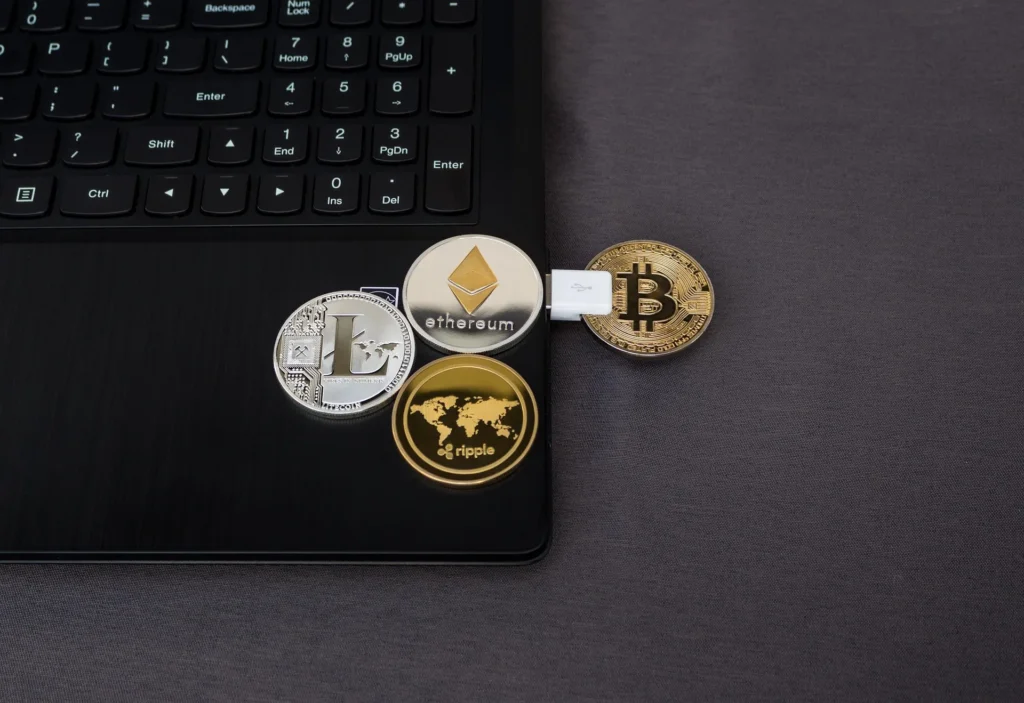
As popular coins like Kaspa (KAS) and Monero (XMR) attract more institutional-grade hash power, network difficulty can spike unexpectedly, slashing daily earnings. To counter this, advanced hardware owners must implement Dynamic Profit-Switching.
By using specialized firmware or mining pools that automatically pivot your hashrate to the most profitable “sub-altcoin” in real-time, you ensure your equipment never runs at a loss. Monitoring the “Difficulty-to-Reward” ratio on a daily basis is now a standard requirement for maintaining a competitive edge in a crowded cryptocurrency market.
The Legal and Tax Landscape: Guidance for Home Operators
Operating a mining rig in 2026 requires a clear understanding of the evolving regulatory environment. While most home operations under 3kW remain exempt from heavy industrial energy restrictions, it is essential to maintain a clear digital paper trail for all earned assets.
Documenting the “fair market value” of each block reward at the time of receipt is vital for accurate financial reporting and seamless conversion to traditional currency. This level of transparency not only protects your personal finances but ensures your operation remains compliant with modern digital asset standards.
Mining with a Small Investment: The Low-Entry “Plug-and-Play” Strategy
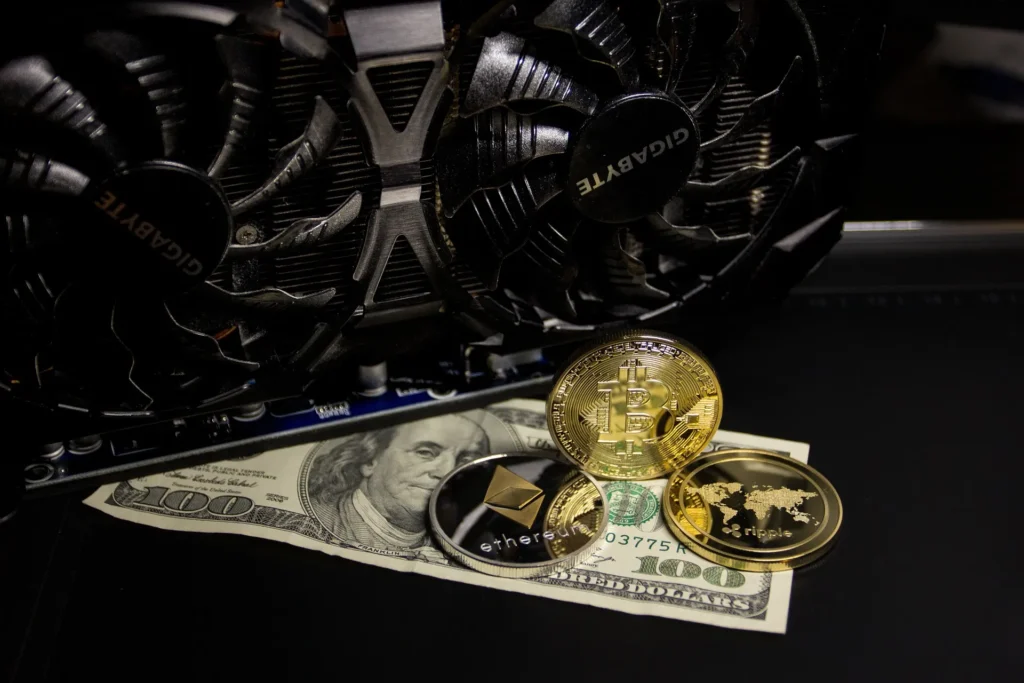
The simplest way to start making money with a small investment—typically under $500—is to leverage your existing hardware or a single, high-efficiency GPU like the NVIDIA RTX 4060. Instead of investing in expensive, loud, and power-hungry ASIC rigs, beginners should focus on CPU mining for Monero (XMR) or GPU mining for Kaspa (KAS).
The “simple way” to execute this is by using a specialized operating system like HiveOS or a one-click miner like NiceHash, which automatically directs your hardware to the most profitable algorithm and pays you in Bitcoin.
To maximize a small budget, avoid building a full mining frame; instead, use a well-ventilated desktop PC and join a Mining Pool. This ensures you receive small, frequent payouts rather than waiting months to find a block solo, allowing you to reinvest your earnings back into more efficient hardware as you scale.
Strategic Coin Selection: Mining for Long-Term Value Growth
When choosing which coins to mine in 2026, look beyond the current daily ROI and focus on cryptocurrency projects with high network utility and scarcity models. Kaspa (KAS) remains a top contender due to its rapid block times and solving of the “trilemma” (security, scalability, and decentralization), which many analysts believe positions it for a major breakout as it gains broader exchange adoption.
For those seeking privacy-centric cryptocurrency growth, Monero (XMR) and Zcash (ZEC) offer a “hedge” against increasing digital surveillance, making them essential for a diversified “mine-and-hold” portfolio. Additionally, keeping an eye on Ravencoin (RVN) is vital for those betting on the tokenization of real-world assets, as its specialized protocol for asset transfer gives it a unique value prop that could see a price surge as blockchain-based legal and real estate documents become mainstream.
By mining these “blue-chip” altcoins now while the difficulty is manageable, you are essentially acquiring them at a “production cost” that could be significantly lower than their future market price.
Risks and Long-Term Outlook
Volatility spikes difficulty; monitor halvings (e.g., LTC 2027). Regulations vary—EU miners face energy caps, but home ops under 3kW skirt most rules. Outlook: Altcoin bull run projected for late 2026, favoring privacy (XMR/ZEC) and utility (RVN/KAS) coins. Diversify across 2–3 to hedge.
Ready to mine? Check WhatToMine daily, start small, and scale with profits for sustainable high returns.
Looking Ahead
As cryptocurrency markets evolve into late 2026 and beyond, altcoin mining remains a dynamic opportunity for savvy operators who adapt to network upgrades, halvings like Litecoin’s in 2027, and emerging layer-1 innovations driving adoption in DeFi and real-world assets. With President Trump’s pro-crypto policies spurring institutional inflows and global hashrate shifting toward energy-efficient PoW coins, low-cost setups targeting Kaspa, Monero, and Ravencoin could see 2-3x profitability gains during the anticipated bull cycle peak. Stay agile by monitoring tools like WhatToMine, diversifying across GPU/ASIC pools, and integrating renewables to hedge volatility—positioning your operation for sustained high returns in the next mining renaissance.
Key Takeaways
- Alternative coins for mining in 2026 provide a low-cost and accessible way to earn cryptocurrency compared to Bitcoin mining.
- The top GPU mining coins in 2026 include Kaspa (KAS), Monero (XMR), and Ravencoin (RVN) due to their GPU/CPU compatibility and strong ROI potential.
- GPU and CPU mining setups allow beginners to start crypto mining with minimal investment, often under $500.
- Electricity cost and mining efficiency are the biggest factors affecting profitability, with ideal rates below $0.10/kWh.
- Using tools like mining calculators and joining pools helps optimize daily mining profits and long-term returns.
- Emerging trends like DePIN and energy-efficient “green mining” are reshaping how miners generate sustainable income in 2026.
- Diversifying across multiple altcoins reduces risk and improves overall crypto mining profitability.
FAQ: Altcoin Mining Basics
What are the most profitable GPU mining altcoins?
Kaspa (KAS), Monero (XMR), and Ravencoin (RVN) top the list for low-cost setups, offering strong daily profits on GPUs/CPUs at electricity rates under $0.10/kWh.
Do I need expensive hardware to start?
No—consumer GPUs like RTX 4070 or CPUs like Ryzen 7 suffice for most altcoins, with entry costs under $500 versus Bitcoin’s $2k+ ASICs.
Is laptop mining viable?
Possible for Monero, but expect minimal profits ($0.10–$0.50/day) and overheating risks; dedicated rigs yield 10-50x better returns.
How much electricity will my rig use?
A 4x GPU setup draws 1-1.5kW; optimize with undervolting for 15-20% savings and aim for cheap power sources.
What software and pools should I use?
XMRig for Monero, T-Rex for GPUs; join F2Pool or ViaBTC for reliable 24/7 payouts over solo mining.
When can I expect ROI?
6-12 months for efficient setups amid 2026 market recovery, faster with solar or merged mining strategies.
Disclaimer
Important Notice: This article provides general educational information on altcoin mining and is not financial, investment, or professional advice. Cryptocurrency mining involves significant risks, including total loss of capital due to market volatility, network difficulty increases, hardware failure, regulatory changes, and electricity costs that may exceed profits. Past performance and projected profitability (e.g., for Kaspa or Monero) do not guarantee future results—always conduct your own research, consult qualified experts, and consider local laws before investing time or money. The author and publisher disclaim all liability for any losses incurred from following this guide. Mining may also impact device warranties and energy consumption.
Find more guides and expert tips at our main site.
Visit Quotela.netRelated posts:
 The Human Factor: Blockchain Security Beyond the Code
 Generational Shift: How Gen Z and Alpha Redefine Wealth Through Crypto Lifestyles
 The Future of Cryptocurrency Trading with Quantum Leap Software
 How to Use Crypto Quantum Leap Software for Maximum Profit
 Exploring the Benefits of Crypto Quantum Leap Software
Mining alternative cryptocurrencies is of interest to me. I think it offers opportunities for a beginner like me.
Welcome to the world of mining, Peter! Altcoins are definitely the best place to start in 2026. Unlike Bitcoin, where you need massive industrial rigs, coins like Monero (XMR) or Kaspa (KAS) allow you to learn the ropes using hardware you might already own. My advice? Start small, monitor your electricity costs, and join a reliable pool like F2Pool to see those frequent payouts. It’s a great way to build a “digital nest egg” while learning about blockchain.
Excellent breakdown of the 2026 mining landscape. I’ve been running an RTX 4070 Ti on Kaspa (kHeavyHash) and the efficiency-per-watt is significantly better than what I was getting on Ravencoin last year. One thing to add for beginners: don’t sleep on overclocking settings in HiveOS. By undervolting the core and bumping the memory clock, I managed to drop my power draw by 15% while maintaining the same hashrate. That makes a huge difference if your electricity is hovering right at that $0.10/kWh mark!
That is a pro-tip right there, Benjamin! You’re absolutely right—efficiency-per-watt is the “secret sauce” for profitability in 2026. Transitioning from Ravencoin to Kaspa on an RTX 4070 Ti is a smart move, as the kHeavyHash algorithm is much kinder on power draw. For our other readers: Benjamin’s mention of undervolting in HiveOS is the fastest way to turn a “break-even” rig into a profitable one. Every watt saved is pure profit.
The mention of DePIN (Decentralized Physical Infrastructure) is spot on. I’ve started splitting my rig’s capacity between Monero (XMR) mining and providing compute for AI model training. It’s a great way to hedge against crypto market volatility. If one coin’s difficulty spikes, the AI compute rewards usually stay stable. This ‘dual-purpose’ mining is definitely the future for home operators.
Spot on, Jacob. DePIN (Decentralized Physical Infrastructure Networks) is shifting the entire mining paradigm this year. By splitting your capacity between Proof-of-Work (PoW) mining and AI compute training, you’re essentially creating a “hybrid” income stream. This “dual-purpose” approach is exactly how home operators are staying competitive against institutional miners in 2026. It’s a great hedge against market volatility!
I tried the ‘One-Click’ strategy with NiceHash on my gaming laptop just to test the waters. It’s surprisingly easy, but like you said, a cooling pad is a must! Already seeing some Bitcoin payouts after just a few days of casual use.
Glad to hear the “One-Click” strategy is working out for you, Alexander! NiceHash is a fantastic entry point because it handles the complex algorithm switching for you. Just keep a close eye on those temperatures—laptops aren’t built for 24/7 heavy lifting like a dedicated RTX 4000 series rig. That cooling pad is your best friend. Enjoy those first Bitcoin payouts!
Regarding the Litecoin and Dogecoin merged mining—do you think it’s still worth getting an Antminer L7 in mid-2026, or is the network difficulty getting too high for home setups? I’m worried about the ROI time if the 2027 halving causes a price dip before I break even.
That is a valid concern, and you’ve touched on the exact ‘inflection point’ many Scrypt miners are facing in mid-2026. Here’s the reality of the Antminer L7 right now:
Efficiency vs. The New Guard: While the L7 was the ‘gold standard,’ we’re now seeing newer models like the Antminer L9 and the VolcMiner D1 hitting the market. These newer rigs offer about 20-30% better efficiency (J/MH). If your electricity is above $0.08/kWh, the L7’s margins will feel the squeeze much faster than the newer generation as network difficulty continues to climb.
The 2027 Halving Factor: You’re right to be cautious about the July 2027 halving. Historically, Litecoin (LTC) sees a run-up in price before the halving, followed by a ‘sell the news’ dip. If you buy an L7 today, your goal should be to hit ROI within 8–10 months to ensure you’ve cleared your hardware costs before that 2027 reward drop hits.
The Dogecoin ‘X-Factor’: The real savior for Scrypt mining continues to be merged mining with Dogecoin. In 2026, DOGE often accounts for 60% or more of the total revenue on an L7. As long as Dogecoin maintains its utility (especially with the rumored integration into X/Twitter payments), it provides a much-needed buffer against LTC difficulty spikes.
Verdict: If you can get a used or discounted L7 and have access to cheap power (under $0.07/kWh), it’s still a viable ‘workhorse.’ However, if you’re paying retail price for a new unit today, you might find yourself with a very long ROI window that gets cut off by the 2027 halving.
We actually discuss this kind of long-term ROI strategy in our other finance guides here on Quotela.net—it’s always better to mine the ‘Blue Chips’ during the bear market and hold for the halving peaks!