5 Fascinating Ancient Prophecies That Still Intrigue Us
Throughout human history, people have been inspired and scared by prophecies, historical predictions, and the mysterious insights of ancient oracles. From the cryptic messages of the Oracle of Delphi to the Sibylline Books of Rome, civilizations have sought guidance from these mystical sources to understand the future, navigate uncertainty, and make decisions that shaped empires. Even today, these ancient predictions continue to intrigue scholars and enthusiasts alike, offering a fascinating window into how our ancestors interpreted the world and attempted to forecast events centuries before they unfolded.
Some of these ancient forecasts have faded into myth, but others still echo in modern culture, politics, and even popular science. Below are five fascinating ancient prophecies that continue to intrigue us today, both for their eerie accuracy and the timeless questions they raise about fate, belief, and human psychology.
1. The Oracle of Delphi’s Fall of Rome
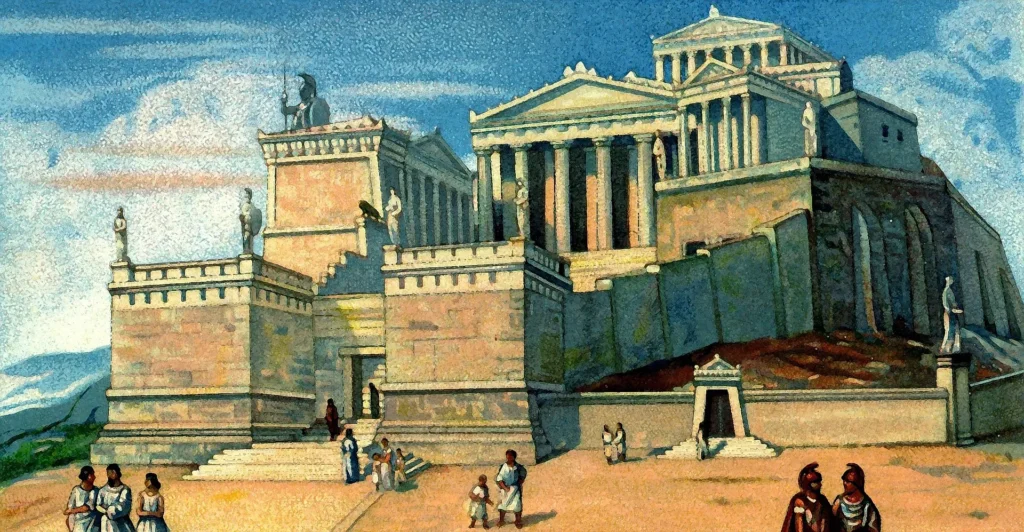
In ancient Greece, the most famous prophetic site was the Oracle of Delphi, where the priestess known as the Pythia delivered cryptic messages believed to come from the god Apollo. Greek rulers, generals, and even ordinary citizens would travel for days to ask about wars, marriages, and the fate of their cities.
One of the most remembered prophecies linked to Delphi is said to have foretold the eventual rise—and then fall—of Rome. When Philip of Macedon consulted the oracle, he was told he could “conquer the world with silver spears,” a phrase interpreted as a warning that his son Alexander would build a vast empire, but that Rome would one day supplant that power. Later, as the Roman Republic gobbled up Greek cities, the Delphic sayings were reinterpreted as a kind of backsight prophecy: the gods had always known that Rome would rise and then decline.
What makes this prophecy fascinating is how often rulers and historians re‑read it to match their own fears and hopes. For modern readers, the Delphi stories remind us that prophecy can be as much about politics and propaganda as it is about divine revelation.
2. The Tiburtine Sibyl and the End of the World
In late antiquity and the early Middle Ages, Christians across Europe were captivated by a figure known as the Tiburtine Sibyl, a pagan prophetess whose visions were compiled in a text called The Prophecy of the Tenth Sibyl. This work, circulating in many languages from the 4th century onward, described a series of coming emperors and an ultimate apocalypse, complete with a final “Trojan emperor” who would restore peace before the world’s end.
The prophecy was so popular that it survived in dozens of medieval manuscripts, influencing rulers as well as ordinary believers who looked for signs of the Last Days in wars, famines, and plagues. Some later readers saw echoes of the Sibyl’s predictions in the fall of empires, the rise of Islam, and even the Crusades. The idea that a single woman’s visions could map out centuries of history gave the prophecy a near‑biblical authority in many circles.
Today the Tiburtine Sibyl fascinates historians and theologians alike because she shows how ancient prophecy could be reused and reshaped across cultures. Even though the text is pseudonymous and heavily edited, it still offers a window into how people in the pre‑modern world made sense of chaos.
3. Daniel’s Four Empires and the Fall of Kingdoms

In the Hebrew Bible’s Book of Daniel, a Jewish exile in Babylon receives a series of visions that describe successive world empires as a giant statue with parts of gold, silver, bronze, iron, and mixed clay. Later interpreters, both Jewish and Christian, read these “metal kingdoms” as referring to Babylon, Persia, Greece, and Rome, each one declining before a final divine kingdom would arise.
What continues to intrigue people is that the sequence of empires roughly matches the historical record: the Babylonian Empire fell to the Persians, Greeks then conquered the Persians, and Rome eventually overtook the Greek‑ruled East. Some readers see the biblical prophecy as evidence of supernatural foresight, while scholars often point out that the text was likely written or edited during the Hellenistic or Roman period, after at least part of the sequence had already unfolded.
Daniel’s prophecy remains a powerful cultural reference point, turning up in sermons, political rhetoric, and even modern conspiracy theories about the “end times.” To historians, it demonstrates how prophecy can be used to reinterpret the past as a blueprint for the future.
4. The Mayan Long Count and the 2012 “Apocalypse”
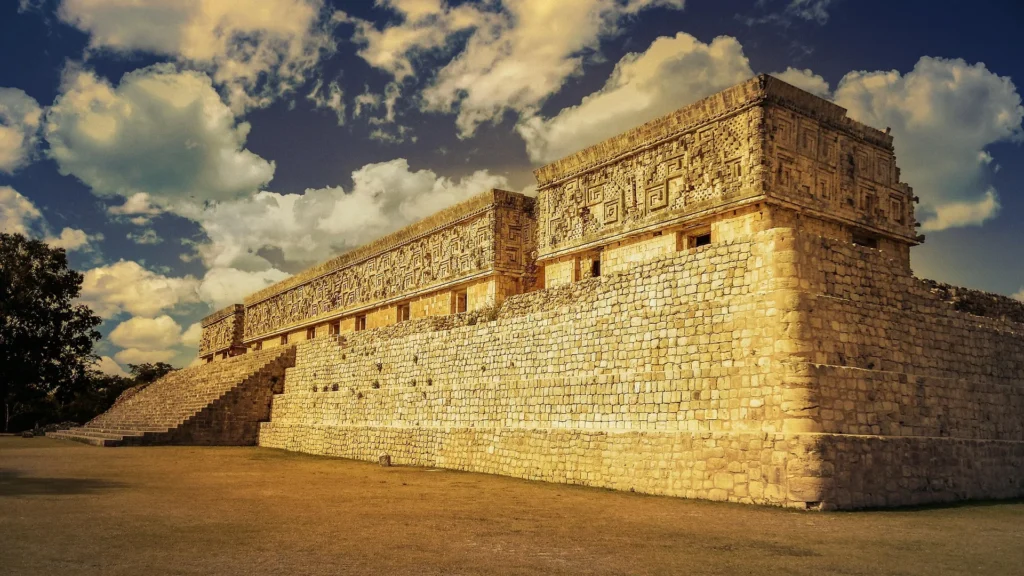
The Maya of Mesoamerica developed a complex calendar system known as the Long Count, which tracked time in cycles of roughly 5,125 years. When one of these cycles ended on what corresponds to December 21, 2012, many modern enthusiasts and popular media outlets claimed that the Maya had predicted an “end of the world” or a great transformation.
In reality, Mayan texts emphasize cyclical renewal rather than permanent doom. For the Maya, the end of a Long Count period was more like a change of calendar eras—similar to how we might celebrate a millennium or a new century—than a prediction of global catastrophe. Still, the 2012 hype shows how easily ancient prophecy can be distorted by modern anxiety and marketing.
What endures from the Long Count is not a failed doomsday prediction, but a sophisticated timekeeping system that still fascinates archaeologists and mathematicians. The “2012 prophecy” also reveals how contemporary culture tends to package ancient ideas as dramatic, headline‑worthy revelations, often stripping them of their original context.
5. The Sibylline Books and Rome’s Fate
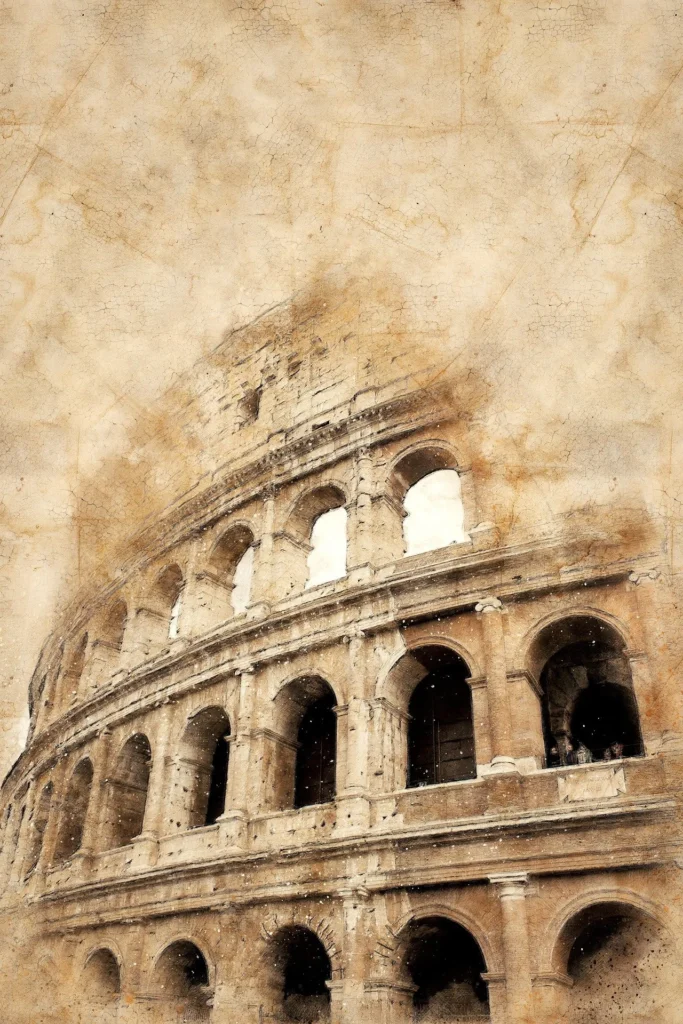
In ancient Rome, a collection of oracles called the Sibylline Books were said to have been purchased by the last king, Tarquinius Superbus, from a mysterious prophetess. These cryptic eschatology scrolls were kept in the Temple of Jupiter and consulted only in times of crisis, such as invasions, plagues, or civil unrest. Senators and priests would request interpretations, and the responses often led to new rituals, temples, or political changes.
The books were believed to contain prophecies about Rome’s rise, its trials, and even hints of its eventual decline. Cicero and Livy both mention that the Senate ordered the books opened after strange omens—such as the sun appearing at night or lightning striking a statue—showing how deeply embedded prophecy was in Roman statecraft.
Although the original Sibylline Books were destroyed in fires and later redactions, their reputation lasted for centuries and fed into later Christian and medieval ideas about Rome’s destiny. The fascination today lies in how an entire empire relied on a set of mysterious texts to guide its decisions, blending religion, politics, and superstition into a single prophetic institution.
Lesser-Known Ancient Prophecies That Shaped History
While the five prophecies discussed earlier are among the most famous, history is filled with many other intriguing forecasts. These lesser-known ancient prophecies demonstrate the global fascination with predicting the future and the influence of oracles across civilizations.
- The Prophecy of Neferti (Ancient Egypt)
Dating back to the 12th Dynasty, the Egyptian sage Neferti predicted the rise of a ruler who would restore order to the kingdom. Scholars view this prophecy as both political and literary, designed to legitimize the pharaoh’s authority while inspiring hope among the populace. - Nostradamus’ Quatrains (16th Century France)
Michel de Nostredame, known as Nostradamus, wrote a series of poetic quatrains that many believe foretold wars, natural disasters, and political shifts. While controversial, his historical predictions continue to spark debates about prophecy and interpretation. - The Oracle of Amphiaraus (Ancient Greece)
Amphiaraus was a seer whose temple near Oropos served as a center for divine guidance. People traveled from across Greece to consult his oracles, seeking insight into wars, personal decisions, and city-state conflicts. - The Chaldean Astrological Predictions (Ancient Babylon)
The Chaldeans combined astrology and prophecy to advise kings on political and agricultural decisions. Their historical predictions influenced military campaigns, crop planning, and the administration of empires. - The Oracle of Dodona (Greece)
Dodona, one of the oldest oracles in Greece, was dedicated to Zeus. Priests interpreted the rustling of oak leaves and other natural signs as messages, giving advice that shaped both local and national decisions. - The Prophecy of Merlin (Medieval Britain)
Though more legendary than strictly historical, Merlin’s prophecies intertwined myth and political counsel. Medieval kings often consulted the Merlin texts to justify decisions or inspire loyalty among their subjects. - The Oracle of Siwa (Ancient Egypt)
Located in the Western Desert, the Oracle of Amun at Siwa was consulted by Alexander the Great. Its ancient predictions were believed to reveal divine approval of rulers and significant military campaigns.
Why These Prophecies Still Intrigue Us
These five prophecies—Delphi’s shifting visions, the Tiburtine Sibyl’s apocalyptic rulers, Daniel’s succession of empires, the Mayan Long Count, and Rome’s Sibylline Books—show how ancient societies tried to find order in an uncertain world. They were rarely just about “the future”; instead, they served as tools for legitimizing rulers, explaining disasters, and binding communities around shared myths.
For modern readers, these prophecies still intrigue because they mirror our own obsession with predictions: from political forecasts and economic models to conspiracy theories and viral “doomsday” dates. The line between genuine insight and retroactive storytelling remains blurry, and that ambiguity is exactly what keeps ancient prophecies alive in books, films, and online discussions around the world.
Further Reading:
- Britannica, T. Editors of Encyclopaedia. “Delphic Oracle.” Encyclopaedia Britannica.
- “List of Oracular Statements from Delphi.” Wikipedia.
- “The Delphic Oracle – Mythology Unbound.” UEN Pressbooks.
- “Tiburtine Sibyl.” Wikipedia.
- Walton, John H. “The Four Kingdoms of Daniel.” BiblicalStudies.org.uk.
- Chanier, Thomas. “The Mayan Long Count Calendar.” arXiv:1312.1456.
- “Sibylline Books.” Wikipedia.
FAQ Section
Q1: What are some famous ancient prophecies?
A1: Famous ancient prophecies include the Oracle of Delphi’s messages about Rome, the Tiburtine Sibyl’s end-of-world visions, Daniel’s four empires prophecy, the Mayan Long Count calendar, and Rome’s Sibylline Books. These predictions often influenced politics, religion, and cultural practices.
Q2: How accurate were historical predictions from ancient oracles?
A2: Accuracy varied widely. Many prophecies were intentionally vague, allowing interpreters to apply them to different events. Some seemed to align with historical outcomes, while others were more symbolic or used for political purposes.
Q3: Why are ancient prophecies still relevant today?
A3: Ancient prophecies remain relevant because they reveal how societies sought order in uncertainty. They also inspire curiosity about fate, human behavior, and the interplay between belief, culture, and history.
Q4: What can we learn from ancient oracles?
A4: Ancient oracles teach us about the values, fears, and priorities of past civilizations. They highlight the human desire to predict the future, influence decisions, and interpret signs from nature or the divine.
Q5: Are prophecies purely mystical, or do they have historical significance?
A5: Prophecies are both mystical and historically significant. While they often involve supernatural claims, they also reflect political, social, and cultural contexts of their time, making them valuable for historians and anthropologists.
Find more guides and expert tips at our main site.
Visit Quotela.netRelated posts:
 TikTok-Famous Food Trends: Viral Recipes and Kitchen Hacks That Took Over 2025
 Making Mistakes Safely: The Smarter Way to Learn Trading with Quotex
 Is the Traditional Classroom Model Still Relevant in the Age of Hybrid Learning?
 Smart Borrowing: Tips for Choosing an Auto Loan You Can Afford
 Unearthing the Past: What is the Oldest City in the World?
The section on the Tiburtine Sibyl is particularly interesting. It’s interesting how medieval rulers used these pagan oracles to justify Christian political movements like the Crusades. It shows that prophecy isn’t just about ‘seeing the future,’ but about building a narrative for the present. I’d love to see a follow-up on how the Book of Daniel’s four empires influenced modern Western historical periods.
Isabella and Lucas, you’ve both hit on such a crucial point—these prophecies were essentially the original Public Relations departments for empires! Isabella, the way medieval rulers ‘rebranded’ the Tiburtine Sibyl to fit a Christian narrative is a masterclass in political storytelling. Lucas, looking into the Chaldean influence on the wonders of Babylon is a great idea for a follow-up. It’s fascinating how ‘National Restoration’ prophecies kept the social fabric together during times of chaos!
I always thought the Mayan 2012 prophecy was a doomsday warning, but it’s refreshing to read that it was actually about cyclical renewal. Do we have any other examples of ancient calendars that people mistakenly turned into ‘end-of-the-world’ predictions?
Liam, it’s a common misconception! Beyond the Maya, the Norse Ragnarok and certain Hindu Yuga cycles are often misinterpreted as ‘end-of-the-world’ doomsdays when they were originally intended to represent the death of an old era and the birth of a new, purified one. Humans seem to have a natural anxiety about the ‘end,’ but the ancients were much more focused on renewal.
Great mention of Alexander the Great and the Oracle of Siwa. It’s a perfect example of how military leaders used ancient predictions to gain divine approval before a campaign. This kind of ‘Prophetic Propaganda’ was basically the heart of the ancient world!
Ava and Noah, ‘Prophetic Propaganda’ is the perfect term for it! Noah, your comparison to modern political forecasting is spot on. While we use data models and algorithms today instead of rustling leaves or Sibylline scrolls, the core human desire is the same: to reduce uncertainty before making a big move. Sometimes a high-tech ‘forecast’ feels just as mystical as an ancient oracle!
Sibylline Book is included here. The idea of the Roman Senate keeping ’emergency scrolls’ in a temple is such a powerful image. It makes me wonder how much of our modern political forecasting is just a high-tech version of the Oracle of Delphi.
I visited the ruins at Dodona last year, and standing by the site of the sacred oak tree really puts these prophecies into perspective. You can really feel the weight of the decisions that were made based on the ‘rustling leaves.’ Thanks for including the lesser-known Greek oracles!
Mia, standing at Dodona must have been incredible—there’s nothing like being physically present at a site to feel the ‘weight’ of those ancient decisions. Chloe, it’s wild to think of a king ‘buying’ the future, isn’t it? As for modern equivalents, some might argue that Constitutions or even Global Economic Treaties are our version of ‘sacred scrolls’ that we consult only in times of extreme national crisis.
It’s interesting to contrast the Oracle of Delphi with the Prophecy of Neferti. While Delphi was often used for individual or military guidance, the Egyptian prophecies seemed much more focused on ‘National Restoration’ and the pharaoh’s divine right to rule. It’s a great example of how ancient oracles weren’t just about the future—they were the original ‘Public Relations’ departments for empires. I’d love to know if there are any similar prophecies from Ancient Mesopotamia or the Chaldean astrologers that influenced the building of the Hanging Gardens or other wonders.
I never realized the Sibylline Books were actually bought by a Roman King! It makes you wonder how much of Rome’s destiny was shaped by a single collection of scrolls. Are there any modern equivalents to these ’emergency’ prophetic texts today?