Why Do People Procrastinate? The Real Reasons
Your deadline is visible on the calendar. The task is not a mystery. Yet somehow, replying to two emails, cleaning the kitchen, or opening a work document feels harder than scrolling for another 20 minutes. Why do people procrastinate when they genuinely want the result? Usually, it is not because they are lazy or incapable. It is because the task is creating an uncomfortable feeling, and postponing it offers quick relief.
That relief is real, but short-lived. The unfinished task stays in the background, often gathering stress, guilt, and higher stakes as time passes. Understanding what is happening beneath the delay can make procrastination far less personal and much easier to interrupt.
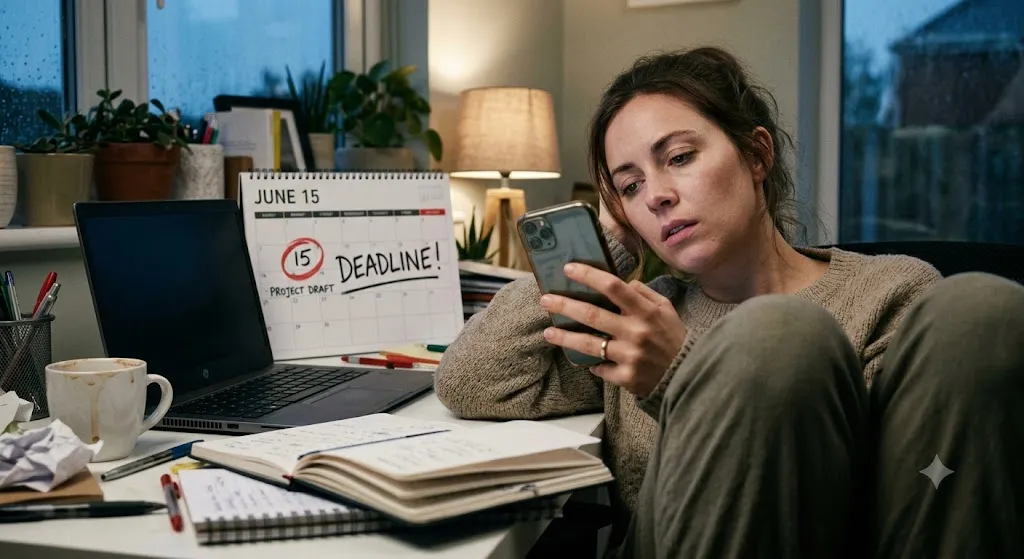
Why Do People Procrastinate Instead of Starting?
Procrastination is often described as poor time management, but it is more accurately a problem of emotion management. A task can bring up boredom, uncertainty, fear of getting it wrong, resentment, or the pressure to do something perfectly. Avoiding it changes your mood for a moment. Your brain learns that avoidance works as a fast escape route.
The catch is that the relief reinforces the habit. If putting off a difficult phone call makes anxiety dip for ten minutes, your mind is more likely to suggest putting it off again next time. This is why highly organized, ambitious people procrastinate too. Having a planner does not automatically remove fear, fatigue, or self-doubt.
The task feels bigger than it is
Vague tasks are especially easy to delay. “Sort out my finances,” “get healthier,” and “start my business idea” all sound important, but they do not tell you what to do at 7:30 p.m. on a Tuesday.
When the first step is unclear, the brain treats the task as a risk. It may not know whether the work will take 15 minutes or five hours, whether it will expose a problem, or whether it will lead to more decisions. In comparison, checking messages offers an instant and familiar reward.
A better starting point is to reduce the task to a visible action. Instead of “work on taxes,” try “find last year’s return” or “log into the tax portal.” Small steps are not trivial. They lower the emotional cost of beginning.
Perfectionism makes action feel dangerous
Perfectionism can look like high standards, but it often creates paralysis. If a presentation, application, workout plan, or social post must be excellent on the first attempt, starting becomes a test of your worth rather than a normal piece of work.
This is why procrastination can be common among people who care deeply. They do not avoid the task because it means nothing. They avoid it because it means too much. The fear may be, “What if I try and prove I am not good enough?” Delaying preserves the possibility that you could have done brilliantly if only you had had more time.
The useful counterweight is not lowering every standard. It is choosing the right standard for the stage. A first draft should be rough. A first call should be exploratory. A first workout can be ten minutes. Quality improves through revision, not through waiting for a flawless beginning.
The reward is too far away
Human beings are naturally drawn to immediate rewards. A streaming show, snack, game, or social feed gives a quick payoff. The benefits of studying, saving money, exercising, or building a portfolio may arrive weeks, months, or years later.
This does not mean you lack discipline. It means the short-term reward is competing against a distant one. The more abstract the future payoff, the easier it is to choose something that feels good now.
Make progress more immediate when you can. Track completed sessions, move money into savings the day you are paid, work alongside a friend, or give yourself a pleasant ritual that is reserved for the task, such as making coffee before writing. The goal is not to bribe yourself endlessly. It is to make the present moment support the future goal.
The Hidden Causes of Procrastination
Sometimes procrastination is a signal rather than a simple habit. Constant delay may point to overload, burnout, poor sleep, anxiety, depression, or attention-related challenges. If basic tasks feel impossible for weeks, or procrastination is affecting work, relationships, finances, or your well-being, support from a qualified health professional can be a practical next step.
Environment matters too. An open laptop beside your bed, nonstop notifications, an unclear workload, and no protected time to think can make focus difficult for anyone. Telling yourself to “try harder” may add shame without changing the conditions that keep pulling your attention away.
There is also a difference between procrastination and intentional rest. Taking an evening off after a demanding week can be healthy. Avoiding an urgent task while feeling increasingly anxious about it is different. Rest restores you. Procrastination tends to drain you because the task remains unresolved.
How to Stop Procrastinating Without Waiting for Motivation
Motivation is helpful, but it is unreliable. Most people do not feel fully ready before they begin a difficult task. A more dependable approach is to make starting so small that you can do it even on a low-energy day.
Try setting a five-minute timer and giving yourself permission to stop when it ends. Open the document. Write the subject line. Put on your walking shoes. Wash three dishes. Often, momentum follows action rather than appearing before it. If it does not, five minutes still counts as a win because you practiced showing up.
Create a start ritual that removes choices. This could mean placing your phone in another room, opening only the tabs you need, writing tomorrow’s first action before ending work, or working at the same time each day. The fewer decisions between you and the task, the less room there is for avoidance.
It also helps to be specific about when and where you will act. “I will exercise more” is a hope. “I will walk for 15 minutes after lunch on Monday, Wednesday, and Friday” is a plan. Plans can change, but specificity makes it easier to notice the exact moment to begin.
Use self-compassion, not excuses
After procrastinating, many people react with harsh self-talk. They call themselves lazy, behind, useless, or hopeless. That may create a burst of panic, but it rarely creates sustainable action. Shame makes the task feel even more threatening, which can restart the avoidance cycle.
A more useful response is honest and kind: “I avoided this because it felt overwhelming. What is the smallest next step?” Self-compassion is not pretending the delay did not matter. It is refusing to turn one missed task into a judgment about your character.
You can also look for patterns. Do you procrastinate most when a task is ambiguous? When you are tired? When someone might evaluate your work? Once you identify the trigger, you can choose a response that fits. Clarify the task, schedule it earlier, ask for feedback sooner, or break it into smaller pieces.
Progress Begins Before You Feel Ready
The most productive people are not people who never procrastinate. They are people who notice the urge to avoid, make the next action smaller, and begin before the perfect mood arrives. A delayed task does not define your discipline, intelligence, or future. It is simply a moment asking for a gentler, clearer way forward.
Today, choose one task you have been carrying around in your mind and make it almost laughably easy to start. The first small action may not feel dramatic, but it is how unfinished things begin to lose their power.
Conclusion
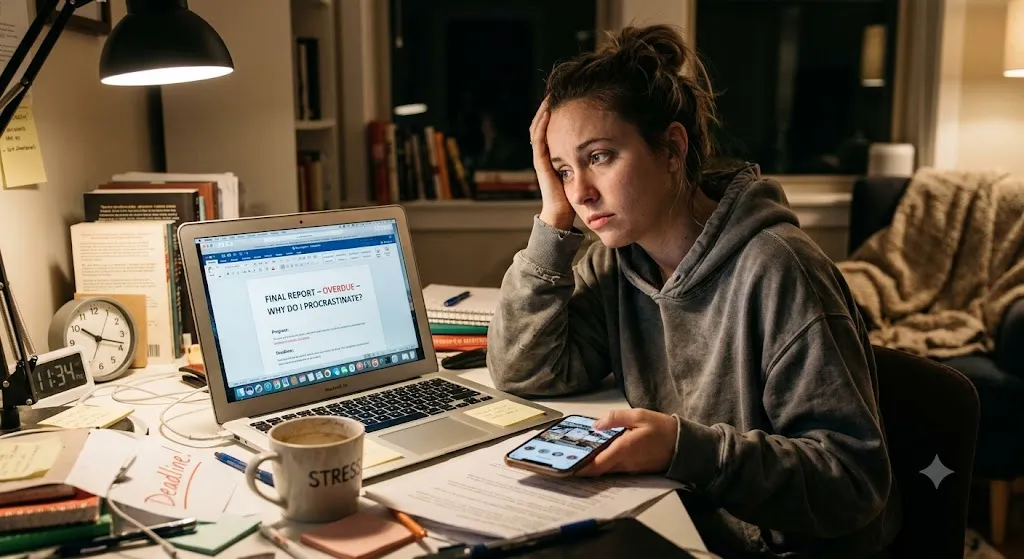
Procrastination is rarely about laziness or poor character. More often, it is a response to difficult emotions such as fear, uncertainty, overwhelm, perfectionism, or mental fatigue. By understanding the real reasons behind delaying tasks, it becomes easier to replace avoidance with practical strategies that make getting started less intimidating.
Small, consistent actions, realistic expectations, and supportive habits can gradually break the procrastination cycle and lead to lasting progress. The goal is not to eliminate procrastination completely but to recognize it early and respond with healthier, more effective behaviors.
Key Takeaways
- Procrastination is usually driven by emotion rather than poor time management.
- Fear of failure, perfectionism, and uncertainty are common reasons people delay tasks.
- Large or unclear tasks are easier to avoid than small, specific actions.
- Immediate rewards often compete with long-term goals, making procrastination tempting.
- Environmental distractions and mental fatigue can increase procrastination.
- Breaking tasks into small, manageable steps makes starting much easier.
- Consistent routines are more reliable than waiting for motivation.
- Self-compassion is more effective than harsh self-criticism when overcoming procrastination.
- Persistent procrastination may sometimes be linked to stress, burnout, anxiety, depression, or attention-related challenges.
- Progress usually begins with taking one small action, not waiting for the perfect moment.
Frequently Asked Questions
Is procrastination the same as laziness?
No, procrastination is an emotional coping mechanism for dealing with uncomfortable tasks, whereas laziness is a general lack of willingness to exert effort. Many hardworking and ambitious people procrastinate.
Why do I procrastinate even when I know the task is important?
Important tasks often create pressure, fear of failure, uncertainty, or perfectionism. Delaying them temporarily reduces those uncomfortable feelings, even though it often increases stress later.
What is the best way to stop procrastinating?
Break the task into the smallest possible first step, remove distractions, and focus on starting rather than finishing. Building momentum is often more effective than waiting for motivation.
Can procrastination be related to mental health?
Yes. Chronic procrastination may sometimes be associated with anxiety, depression, burnout, ADHD, or high stress levels. If it significantly affects daily life, speaking with a qualified healthcare professional may be helpful.
Suggested Sources
- American Psychological Association (APA) – https://www.apa.org
- American Psychological Association, Why Waiting Until the Last Minute Can Be So Tempting (APA Monitor)
- Timothy A. Pychyl, PhD – Carleton University (research on procrastination)
- Dr. Fuschia M. Sirois – Durham University (research on procrastination, stress, and health)
- Joseph R. Ferrari, PhD – DePaul University (research on chronic procrastination)
- Steel, P. (2007). The Nature of Procrastination: A Meta-Analytic and Theoretical Review of Quintessential Self-Regulatory Failure. Psychological Bulletin, 133(1), 65–94.
- Sirois, F. M., & Pychyl, T. A. (2013). Procrastination and the Priority of Short-Term Mood Regulation: Consequences for Future Self. Social and Personality Psychology Compass.
- National Institute of Mental Health (NIMH) – https://www.nimh.nih.gov
- Mayo Clinic – https://www.mayoclinic.org
- Cleveland Clinic – https://health.clevelandclinic.org
Ana Milojevik
About the Author
Ana Milojevik is a writer and contributor at Quotela.net, a general-interest publication covering business, health, technology, travel, personal development, quotes, and digital trends. She enjoys researching practical topics and creating informative content that helps readers discover new ideas, insights, and useful perspectives.
Related posts:
 How to Stop Overthinking and Feel Calmer
 TikTok-Famous Food Trends: Viral Recipes and Kitchen Hacks That Took Over 2025
 Making Mistakes Safely: The Smarter Way to Learn Trading with Quotex
 Is the Traditional Classroom Model Still Relevant in the Age of Hybrid Learning?
 Smart Borrowing: Tips for Choosing an Auto Loan You Can Afford