Is Copy Trading Safe? Risks, Rules, and Red Flags
A trader’s page can make copying their moves look almost effortless: a high win rate, a smooth-looking return chart, and a few confident comments from followers. But asking is copy trading safe means looking beyond the dashboard. Copy trading can be a useful way to learn how markets work, but it can also magnify losses quickly when you do not understand the strategy, the platform, or the risks attached to the assets being traded.
The safest mindset is simple: copy trading is not a savings account, a guaranteed income stream, or a shortcut around learning. You are still putting your own money at risk. The fact that someone else presses the buttons does not remove that responsibility.
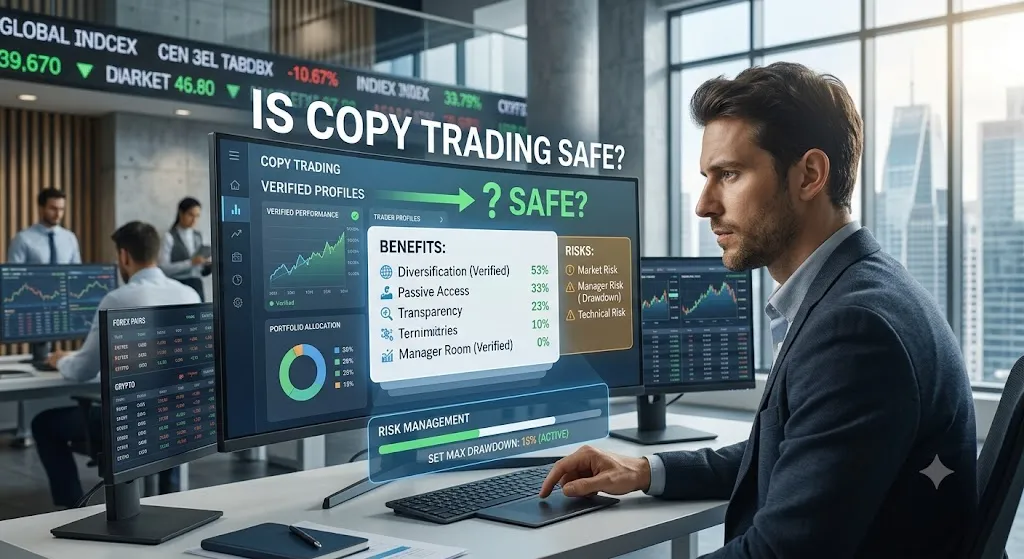
Is Copy Trading Safe for Beginners?
Copy trading can be safer than making random trades based on social media tips, but only when it is approached with clear limits and careful research. It allows you to automatically mirror another investor or trader’s positions, usually in proportion to the amount you allocate. If they buy, sell, or close a trade, your account does the same.
That convenience is also where the danger starts. A skilled trader may have a level of experience, access to capital, and tolerance for losses that is very different from yours. They may be trading leveraged forex, CFDs, options, or volatile cryptocurrencies. A loss they can comfortably absorb could be painful for a new follower.
Beginners should also remember that a successful track record is not proof of future results. Markets change, strategies stop working, and some profiles look stronger than they really are because they have only performed well during a favorable period. A trader with three profitable months has not necessarily proven they can handle a market downturn.
Copy trading may suit someone who wants a structured introduction to investing or active trading, but it is not automatically appropriate for someone who needs certainty, has high-interest debt, or cannot afford to lose the money they deposit.
The Real Risks Behind Copy Trading
The biggest risk is straightforward: you can lose money. Depending on the platform and the instruments involved, losses may happen fast. Leverage deserves special attention because it allows a relatively small market move to create a much larger gain or loss. It is common in forex and CFD trading, and it can make a seemingly steady strategy far more fragile than its headline return suggests.
There is also trader risk. You are trusting a person whose full financial situation, decision-making process, and discipline you cannot see. Some traders take large risks to chase a place on a leaderboard. Others may use strategies that produce frequent small gains but occasionally suffer one severe loss. A high win rate sounds reassuring, yet it tells you very little without context about the size of losing trades.
Platform risk matters too. Not every copy-trading service offers the same protections, fees, or transparency. A legitimate platform should explain how copied trades are executed, what happens when prices move quickly, how your funds are held, and whether it is regulated in the jurisdiction where you live. If the platform is vague about these basics, treat that as a warning rather than a minor inconvenience.
For crypto copy trading, the risks can be even sharper. Crypto prices can move dramatically around the clock, regulation differs by location, and some services operate with limited customer protections. A strategy that appears stable during a rising market can unravel when sentiment turns.
Finally, there is the risk of emotional outsourcing. When someone else is trading for you, it is easy to stop paying attention. You may ignore losses longer than you should because the trader has done well before, or panic and stop copying after a normal losing streak. Safety requires staying involved, even if the process is automated.
How to Assess a Trader Before You Copy
A strong return is only one piece of the picture. Look first at how the return was achieved. If a platform provides data, review the trader’s history over a meaningful period, ideally across different market conditions. Then examine their maximum drawdown, which shows the largest peak-to-trough decline in their account. A 40% drawdown means an account that reached $10,000 at its peak fell to $6,000 before recovering or falling further. That can be difficult to live with, no matter how attractive the long-term chart appears.
Pay attention to consistency rather than one spectacular month. A trader who has made moderate returns while keeping losses relatively controlled may be easier to evaluate than one with huge swings. Check the assets they trade, their average holding time, the number of open positions, and whether leverage is involved. If you do not understand the strategy well enough to explain its main risk in a sentence, you are not ready to copy it.
It also helps to be skeptical of perfect-looking records. No losing trades, extreme monthly returns, pressure to deposit immediately, and promises of guaranteed profits are all classic red flags. Legitimate investing involves uncertainty. Anyone selling certainty is selling the wrong idea.
Choose the Platform as Carefully as the Trader
A polished app is not the same as a trustworthy financial service. Before depositing, verify whether the provider is authorized or regulated where appropriate for your location. In the United States, that may involve checking the relevant securities, commodities, or state-level oversight depending on what is offered. International platforms may fall under different rules, so do not assume a familiar logo or large social following equals protection.
Read the fee schedule before you follow anyone. Costs can include spreads, commissions, overnight financing charges, subscription fees, performance fees, withdrawal fees, and currency conversion charges. Small fees can become meaningful when trades happen frequently.
You should also understand execution differences. Your copied trade may not be opened at exactly the same price as the lead trader’s, especially in fast-moving markets or if your account size differs. This is called slippage, and it can cause your real result to lag behind the result shown on the trader’s profile.
Look for clear controls within the platform. Useful features include a maximum amount you can allocate, a stop-copy setting, loss limits, straightforward withdrawal procedures, and transparent reporting. The absence of these controls does not automatically prove a platform is unsafe, but it gives you fewer ways to protect yourself.
A Safer Way to Start Copy Trading
If you decide to try copy trading, start small enough that a complete loss would not disrupt your finances or your peace of mind. This is not pessimism. It is how you give yourself room to observe the experience without making one decision carry too much weight.
Set a personal loss limit before you begin. Decide what percentage decline would make you stop and reassess, rather than waiting until emotions take over. Keep the money allocated to copy trading separate from emergency savings, rent, bills, and long-term retirement goals.
Diversification can reduce dependence on one person, but it is not a magic shield. Copying several traders who all buy similar assets or use similar high-leverage tactics may create the illusion of diversification while concentrating the same risk. A better approach is to understand what each strategy actually owns or trades.
Review your account regularly. You do not need to stare at every price movement, but you should know whether the trader has changed style, increased risk, or entered markets you are uncomfortable holding. Stop copying if the strategy no longer matches your limits, even if you are tempted to wait for a recovery.
Watch for These Copy Trading Red Flags
Be especially cautious when a service or trader uses aggressive language such as “risk-free,” “guaranteed,” or “easy passive income.” Financial markets do not offer guaranteed returns, and legitimate providers should make risks clear rather than hide them in fine print.
Other warning signs include requests to send funds directly to an individual, pressure to communicate only through private messaging apps, screenshots instead of verifiable performance data, unclear withdrawal rules, and unusually high referral rewards. You should never share passwords, recovery phrases, or remote access to your device with a trader, mentor, or supposed account manager.
A little patience can save a lot of money. The most credible opportunity will still be there after you have read the terms, checked the company, and tested the process with an amount you can afford to lose.
Copy trading is safest when it is treated as a controlled experiment, not a promise. Keep your expectations realistic, protect the money that supports your real life, and let curiosity be guided by caution. Smart investing is rarely about finding someone to follow. It is about knowing exactly how much risk you are willing to carry yourself.
Key Takeaways
- Automated Convenience, Shared Risk: Copy trading mirrors every trade automatically, meaning you inherit a master trader’s bad decisions and market losses just as quickly as their wins.
- Red Flags to Watch For: Avoid lead traders with short track records, unnaturally high win rates (often hiding unmanaged downside risk), or those who rely on extreme leverage.
- Regulatory Protection is Crucial: Using a platform regulated by top-tier financial authorities (such as the FCA, ASIC, or CySEC) ensures fair execution, segregated funds, and protection against fraud.
- The Rule of Capital Allocation: Never allocate your entire trading balance to a single trader; set strict individual stop-loss limits to automatically disconnect if a trader’s losses exceed your risk tolerance.
- Active Management Required: Copy trading is not a passive “set-it-and-forget-it” income stream. Safe copy trading requires regular portfolio monitoring and strategic rebalancing.
Conclusion
So, is copy trading safe? The short answer is: only as safe as your strategy for managing it.
Copy trading eliminates the need to master market analysis overnight, but it does not remove market risk. It shifts your primary responsibility from analyzing chart patterns to analyzing human behavior and platform integrity.
By knowing the key red flags—like excessive leverage and unproven track records—and adhering to fundamental rules like strict platform regulation and capital diversification, you can significantly mitigate your downside. Treat copy trading not as a shortcut to passive wealth, but as an interactive tool where risk management remains firmly in your hands.
About the Author
Ana Milojevik is a writer and contributor at Quotela.net, a general-interest publication covering business, health, technology, travel, personal development, quotes, and digital trends. She enjoys researching practical topics and creating informative content that helps readers discover new ideas, insights, and useful perspectives.