How Search Engines Work: The Ultimate Guide
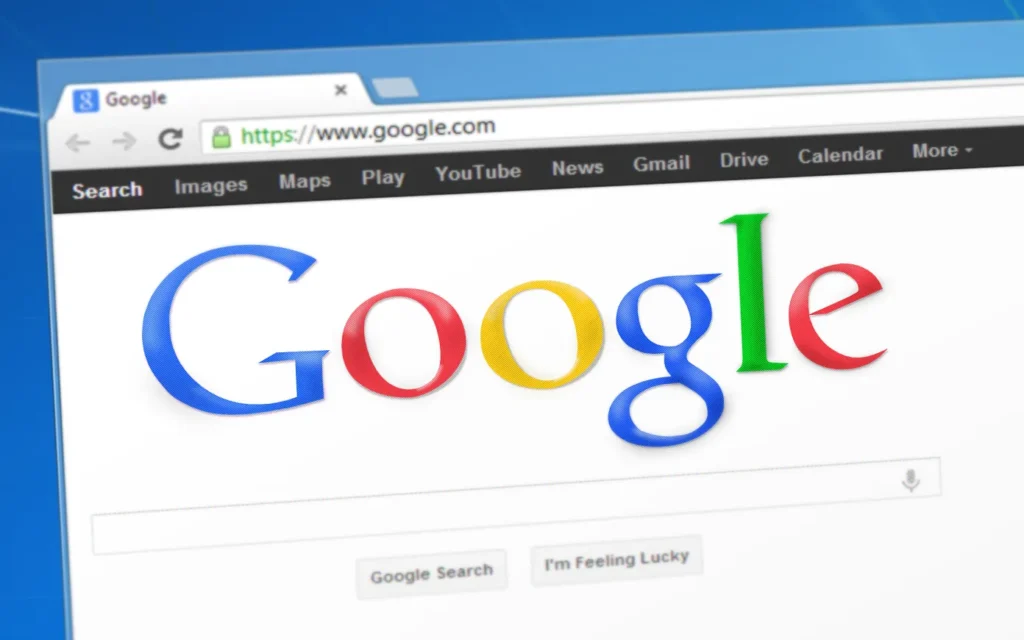
Search engines power the internet’s information superhighway, connecting billions of users to relevant content in milliseconds. This comprehensive guide breaks down their inner workings, from discovery to delivery, drawing on established processes like crawling, indexing, and ranking.
Core Stages Explained
Search engines operate through three primary phases: crawling, indexing, and serving results.
Crawlers, or spiders, systematically explore the web by following links from known pages, downloading content like text, images, and videos. Not all pages get crawled equally; factors like site authority and update frequency influence crawl budget, the resources allocated to a site.
During indexing, engines analyze and store page data in massive databases, understanding topics, structure, and entities while discarding low-value or duplicate content. Google’s index, for instance, holds trillions of pages, organized for rapid retrieval.
Serving results happens when a query triggers the engine to match indexed pages against hundreds of signals, prioritizing relevance and quality.
Crawling in Depth
Crawling begins with seed URLs, often from directories like sitemaps, then branches out via hyperlinks.
Bots like Googlebot respect robots.txt files to avoid restricted areas and revisit pages periodically to capture changes. Challenges include infinite loops from poor link structures or JavaScript-heavy sites that require rendering.
In 2026, AI-enhanced crawlers handle dynamic content more efficiently, adapting to evolving web technologies.
Indexing Process
Once crawled, content undergoes parsing to extract semantics: keywords, headings, multimedia, and relationships to other pages.
Engines apply natural language processing to grasp intent, such as distinguishing “apple” the fruit from the company. Only valuable pages join the index; thin content or noindex tags lead to exclusion.
The index acts like a digital library catalog, enabling sub-second queries across billions of documents.
Ranking Algorithms
Ranking evaluates relevance using over 200 factors for Google, including content quality, backlinks, user signals, and freshness.
PageRank, pioneered by Google, weighs link authority like academic citations. Modern systems incorporate BERT-like models for query understanding and E-E-A-T (Experience, Expertise, Authoritativeness, Trustworthiness) for quality.
Personalization tweaks results based on location, device, history, and language, as seen in localized “bicycle repair” searches.
| Ranking Factor | Description | Example Impact |
|---|---|---|
| Relevance | Keyword match and topic alignment. | Pages with exact query terms rank higher. |
| Authority | Backlinks from trusted, high-authority sites. | High-domain sites outrank newer, unlinked ones. |
| Quality | Content depth, originality, and E-E-A-T signals. | Expert-written articles beat thin, AI-only summaries. |
| User Experience | Site speed, mobile-friendliness, and interactivity. | Strong Core Web Vitals boost search positions. |
| Freshness | Frequency of updates and content recency. | News and trending queries favor current content. |
AI’s Growing Role
AI overviews now summarize results atop pages, synthesizing multiple sources without clicks. Multimodal indexing processes images and videos alongside text, improving visual search.
Generative engines like those evolving from Google and Bing predict intent proactively, blending traditional ranking with conversational responses.
Challenges for Websites
Sites must optimize for crawling via sitemaps and fast hosting. Duplicate content risks deindexing, while HTTPS and mobile optimization aid ranking.
SEO pros monitor logs for crawl errors and use structured data for rich snippets.
Future Directions
Expect deeper AI integration, zero-click answers, and voice/visual search dominance. Privacy-focused engines like Brave prioritize user data control while maintaining accuracy.
Quantum computing may revolutionize indexing speeds, handling exabytes effortlessly.
Understanding these mechanics empowers creators like you to craft content that thrives in this ecosystem.
Find more guides and expert tips at our main site.
Visit Quotela.netAbout the Author
Ana Milojevik is a writer and contributor at Quotela.net, a general-interest publication covering business, health, technology, travel, personal development, quotes, and digital trends. She enjoys researching practical topics and creating informative content that helps readers discover new ideas, insights, and useful perspectives.
Related posts:
 Building a Localization Framework for 50+ Markets Using Headless Architecture
 Solar Powered Generators for Family Camping Holidays
 CNC Machining Services in 2025: The Complete Buyer’s Guide for Engineers
 AI Girlfriend Roleplay Chat for Realistic Conversations
 JUnit Testing Guide: Writing Reliable Unit Tests in Java
This is a great high-level overview, but for those of us managing enterprise-level sites, the section on crawling is where the real battle is won. In 2026, managing your crawl budget is more critical than ever. If you have a massive e-commerce site with millions of faceted navigation URLs, you can easily waste Googlebot’s resources on low-value pages. I’ve found that a strict robots.txt strategy combined with a clean internal linking structure is the only way to ensure your ‘money pages’ get indexed quickly. Also, don’t overlook JavaScript rendering—if your content relies on heavy client-side scripts, the ‘second wave’ of indexing might delay your rankings by days!
You’ve hit on the “hidden” side of SEO, Caleb! For enterprise sites, the battle really is won or lost in the crawl budget. If Googlebot is spinning its wheels on millions of filtered navigation pages, your high-priority “money pages” suffer. Your point about JavaScript rendering is also a critical warning for 2026—the “two-wave” indexing process can be a silent killer for rankings if your core content isn’t visible in the first pass. A clean internal linking structure isn’t just a UX choice; it’s a direct instruction manual for crawlers. Thanks for sharing that professional insight.
I’m inspired by the ‘AI’s Growing Role’ section. We’re moving away from simple keyword matching toward vector-based search. Modern engines don’t just look for words; they convert content into mathematical embeddings to understand deep relationships between topics. This is why topical authority matters so much now—you can’t just rank for one keyword without proving you understand the entire niche. I wonder how much of the current indexing process is now being used to train LLMs (Large Language Models) directly? It feels like the line between a search engine and an AI assistant is completely disappearing.
That’s a brilliant observation, Aria! We are definitely moving from “strings to things.” By converting content into mathematical embeddings, search engines can now understand the relationship between topics rather than just matching keywords. This makes topical authority the ultimate ranking factor—you have to prove you’re an expert in the entire niche. As for your question on LLMs, the line is indeed blurring; search engines are essentially becoming the real-time “knowledge base” for AI assistants. It’s good time to be in search!
Spot on with the UX ranking factors! I saw a 15% jump in my rankings just by fixing my Largest Contentful Paint (LCP) and improving my mobile interactivity signals. In 2026, if your site doesn’t load instantly on a 5G connection, the search engine won’t even bother moving you to the indexing phase. Speed is a prerequisite, not a bonus.
A 15% jump just from fixing Largest Contentful Paint (LCP) is a huge testament to how much weight search engines are putting on user experience now. You’re exactly right—in 2026, site speed is the “cover charge” to get into the club. If your site doesn’t load instantly, the engine won’t waste resources moving you further into the ranking phase. It’s a “performance-first” ecosystem, and those mobile interactivity signals are the new gold standard for Core Web Vitals.
The rise of AI Overviews and zero-click searches is a bit scary for creators. If the search engine gives the answer at the top of the page, why would anyone click through to the site? We need to focus on ‘content that requires a click’—like deep-dive tutorials or interactive tools—rather than just factual snippets that an AI can easily summarize. Also, I’m keeping an eye on Brave Search; their independent index is a great alternative to the Google/Bing duopoly.
It’s real concern, Maya. The rise of AI Overviews means we have to pivot our content strategy. If a query can be answered in a single sentence, the AI will take that traffic. Our goal now is to create “un-summarizable” content: deep-dive tutorials, unique Case Studies, or interactive tools that provide value far beyond a factual snippet. Also, I’m with you on Brave Search—having an independent, privacy-focused index is a breath of fresh air for the industry and a great way to diversify your traffic sources.