How to Pack Light: A Carry-On-Only Checklist
Traveling with only a carry-on bag can make your journey simpler, more comfortable, and less stressful. Instead of waiting at baggage claim, paying extra checked luggage fees, or worrying about lost suitcases, you can move through airports more easily and keep everything you need within reach.
Packing light does not mean sacrificing comfort or leaving essential items behind. It means choosing versatile clothing, organizing your belongings efficiently, and bringing only what you are likely to use. With a little planning, a single carry-on suitcase and a personal item can be enough for a weekend getaway or even a longer international trip.
Whether you are planning a city break, a business trip, or a two-week holiday, this guide explains how to pack light and provides a practical carry-on-only checklist to help you prepare.
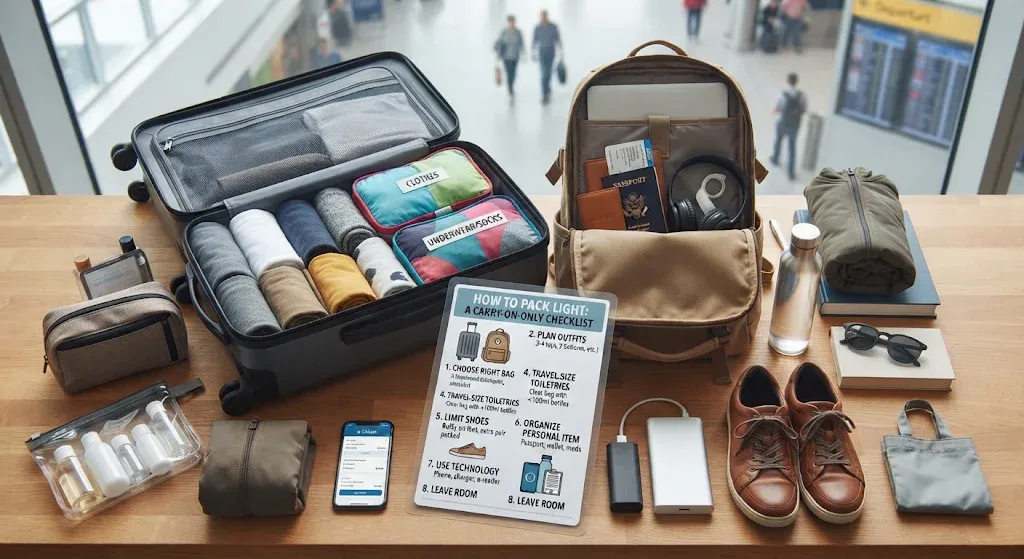
1. Choose the Right Carry-On Bag
The first step toward successful light packing is choosing luggage that meets your travel needs and airline restrictions.
A small, lightweight suitcase with wheels is a practical option for most travelers. Look for a design with separate compartments, durable zippers, and enough flexibility to accommodate your essentials without becoming difficult to close.
A travel backpack is another good choice, particularly if you expect to walk frequently, use public transportation, or move between several destinations.
Before packing, check your airline’s cabin baggage policy. Carry-on dimensions, weight restrictions, and the allowance for personal items vary between airlines and ticket types. Some low-cost airlines include only a small personal bag in their basic fares, while others allow an additional cabin suitcase.
As a rough guide, many European airlines allow a cabin bag of about 55 x 40 x 20 cm, while many US airlines allow about 22 x 14 x 9 inches (56 x 36 x 23 cm). Limits vary widely, so always confirm the exact size and weight with your airline.
What to look for in a carry-on bag:
- Lightweight construction that does not use too much of your baggage allowance.
- Compartments for clothing, toiletries, and travel documents.
- Durable wheels or comfortable backpack straps.
- A secure zipper or locking system.
- Dimensions that comply with your airline’s requirements.
2. Plan Your Outfits Before Packing
One of the most common packing mistakes is bringing too many clothes. Travelers often pack several outfits for every possible occasion, including items they never actually wear.
Instead, plan your clothing around your itinerary, destination, and expected weather conditions.
Choose a simple color palette so that most pieces can be combined. Neutral colors such as black, white, beige, navy, and gray work particularly well because they allow you to create multiple outfits with fewer items.
A useful approach is to select clothing that serves more than one purpose. A casual shirt can work during the day and look appropriate for dinner when combined with different trousers or accessories.
As a starting point for a trip of about one week, consider packing:
- 3–4 tops or T-shirts.
- 2 pairs of trousers, jeans, or skirts.
- 1 versatile dress or an additional outfit for evenings.
- 1 lightweight sweater or cardigan.
- 1 jacket appropriate for the weather.
- 5–7 sets of underwear.
- 4–5 pairs of socks.
- 1 set of sleepwear.
- 1 comfortable pair of walking shoes.
- 1 additional pair of lightweight shoes, if needed.
You do not necessarily need a different outfit for every day. Repeating clothing combinations is one of the easiest ways to reduce luggage without compromising your appearance.
3. Use the Rolling Method and Packing Cubes
How you arrange clothing inside your suitcase can make a noticeable difference.
Rolling softer garments instead of folding them flat can help organize the available space and make individual items easier to locate. T-shirts, casual trousers, leggings, and lightweight dresses are particularly suitable for rolling.
Packing cubes offer another practical solution. These lightweight fabric organizers separate clothing into categories and help prevent your suitcase from becoming disorganized during the trip.
For example, you can use:
- One packing cube for tops.
- One for trousers and other clothing.
- A small pouch for underwear and socks.
- A separate waterproof bag for dirty laundry.
In a rolling suitcase, place heavier items close to the wheels to improve balance. In a backpack, keep them close to your back. Keep frequently needed belongings in easily accessible compartments.
Avoid forcing too many items into your luggage. An overpacked suitcase is harder to close, heavier to carry, and more difficult to organize.
4. Pack Travel-Size Toiletries
Toiletries can occupy more space than expected, especially when you bring full-size shampoo bottles, skincare products, and cosmetics.
For carry-on-only travel, choose travel-size containers and take only the products you regularly use.
Most importantly, check the liquid restrictions at your departure airport and any connecting airports. Under the commonly applied 100 ml rule, liquids, gels, creams, pastes, and aerosols must be carried in individual containers of no more than 100 ml, placed inside a transparent, resealable bag with a capacity of no more than one liter. Local airport security rules and exemptions may differ.
Essential toiletries to consider:
- Travel-size shampoo and conditioner.
- Toothbrush and toothpaste.
- Small deodorant.
- Face cleanser and moisturizer.
- Sunscreen.
- Basic makeup products.
- Hairbrush or compact comb.
- Essential personal hygiene products.
- Travel-size tissues and hand sanitizer (100 ml or less).
Solid alternatives can save space and simplify airport security. Solid shampoo bars, for example, do not fall under liquid restrictions in the same way as liquid shampoo.
If your accommodation provides toiletries, consider leaving those products at home.
5. Limit Shoes and Bulky Clothing
Shoes are among the heaviest and most space-consuming items in a suitcase. Bringing several pairs for a short holiday can quickly use up valuable luggage space.
A practical strategy is to wear your bulkiest shoes during the journey and pack only one additional pair if necessary.
For most city holidays, comfortable walking shoes are essential. Depending on your destination and activities, a second pair of lightweight sandals, flats, or dress shoes may be sufficient.
The same principle applies to jackets and sweaters. Wear your heaviest outerwear while traveling rather than placing it inside your suitcase.
Choose clothing made from lightweight, breathable, and relatively wrinkle-resistant fabrics whenever possible. These materials are easier to pack and more comfortable to wear during different activities.
6. Organize Your Personal Item
In addition to your carry-on suitcase, many airlines allow a personal item such as a handbag, laptop bag, or small backpack. However, allowances vary, so check your ticket conditions before departure.
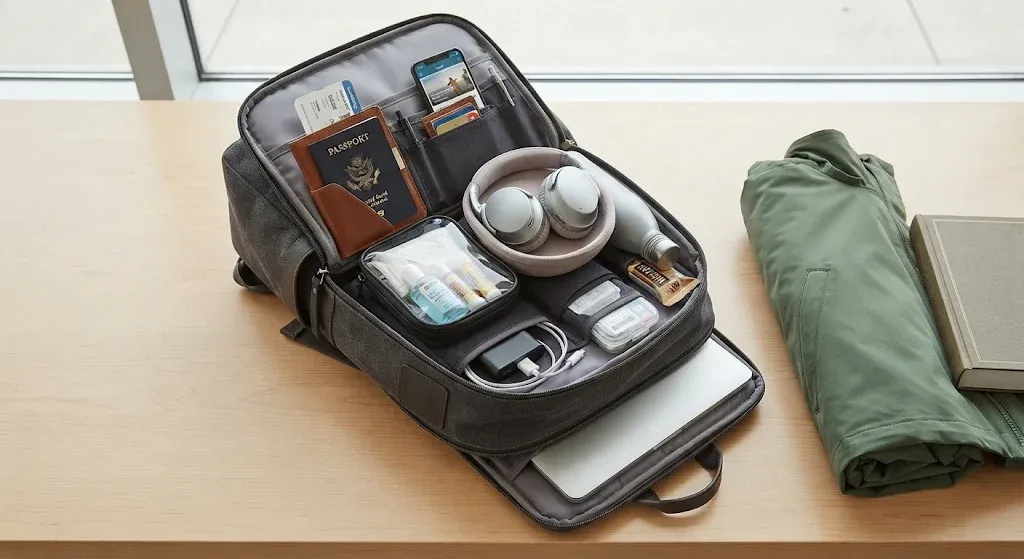
Your personal item should contain everything you may need during the flight and the most important belongings you cannot afford to lose.
Recommended personal-item essentials:
- Passport (required for international travel) or national identification document for domestic trips.
- Boarding pass and travel documents.
- Wallet, payment cards, and some cash.
- Mobile phone and charging cable.
- Headphones.
- Essential medication.
- Glasses or contact lenses.
- Travel-size tissues and hand sanitizer.
- A reusable water bottle, emptied before security and refilled afterward.
- A light snack.
- A book, e-reader, or other entertainment.
Keep valuables, important documents, and essential medication in the bag that stays under the seat in front of you, rather than in the overhead bin.
7. Use Technology to Reduce What You Carry
Modern travel technology makes it easier to avoid carrying unnecessary physical items.
Instead of packing several books, printed maps, travel guides, and entertainment devices, use your smartphone or e-reader whenever practical.
Before departure, download the information you may need offline. Airport Wi-Fi and mobile data are not always reliable, particularly when traveling internationally.
Useful digital preparations include:
- Downloading boarding passes where available.
- Saving hotel reservations and transport tickets.
- Downloading offline maps.
- Keeping copies of important travel documents.
- Downloading books, music, or movies.
- Installing your airline’s mobile application.
- Checking whether your destination requires specific travel or entry documentation.
A single charging cable with compatible connectors may also replace several separate accessories.
8. Leave Room for Unexpected Needs
Packing light does not mean filling every available space. Leaving a little room allows you to accommodate small purchases, souvenirs, or items you may need during your journey.
A foldable shopping bag is particularly useful because it takes up very little space and can be used for groceries, beach items, or additional belongings.
If you are traveling to a destination with unpredictable weather, consider packing one lightweight extra layer rather than several bulky garments.
It is also worth remembering that many everyday necessities can be purchased at your destination. There is little reason to carry large quantities of toiletries or disposable products for a short trip.
9. Check Your Luggage Before Leaving Home
Once everything is packed, perform a final review. This is the moment to identify unnecessary items and make sure you have not overlooked anything important.
Close your suitcase and check its weight and dimensions. Compare them with your airline’s current baggage allowance, including any restrictions on personal items.
If your suitcase feels too heavy, remove duplicate clothing, unnecessary accessories, and products that can easily be purchased at your destination.
A well-organized carry-on should be easy to lift, close, and access throughout your journey.
The Complete Carry-On-Only Packing Checklist
Use this checklist when preparing for your next trip. Adjust the quantities according to your destination, travel duration, weather, and personal needs.
Clothing
- 3–4 versatile tops or T-shirts
- 2 pairs of trousers, jeans, or skirts
- 1 additional outfit for evenings or special occasions
- 1 sweater or cardigan
- 1 lightweight jacket
- 5–7 sets of underwear
- 4–5 pairs of socks
- 1 set of sleepwear
- Comfortable walking shoes
- 1 additional pair of shoes, if necessary
Toiletries and Personal Care
- Toothbrush and toothpaste
- Travel-size shampoo and conditioner
- Deodorant
- Face cleanser and moisturizer
- Sunscreen
- Basic makeup
- Hairbrush or comb
- Personal hygiene products
- Small toiletry bag
- Transparent resealable liquids bag, if required
Travel Documents and Money
- Passport or required identification
- Boarding pass
- Hotel and transport reservations
- Travel insurance documents
- Wallet and payment cards
- Some local currency
- Copies of important documents
Electronics
- Smartphone
- Phone charger
- Headphones
- Power bank (cabin bag only; check your airline’s limits)
- Travel adapter, if required
- E-reader or tablet, if needed
Personal Item and Extras
- Essential medication
- Glasses or contact lenses
- Tissues and hand sanitizer
- Empty reusable water bottle
- Small snack
- Sunglasses
- Foldable shopping bag
- Book or travel entertainment
- Packing cubes
- Laundry bag
Final Departure Check
- Checked airline carry-on dimensions and weight restrictions
- Checked liquid restrictions
- Confirmed that essential documents are accessible
- Checked weather conditions at the destination
- Charged electronic devices
- Removed unnecessary items
- Weighed and closed the suitcase
How to Pack Light for Longer Trips
Traveling for two weeks or more does not necessarily require a larger suitcase. The secret is to plan for laundry rather than pack a separate outfit for every day.
Choose clothing that can be washed easily and dries relatively quickly. Many hotels and apartments offer laundry facilities, while some destinations have affordable self-service laundromats.
For longer trips, pack approximately one week’s worth of clothing and plan to wash and reuse selected items. This approach is particularly effective when visiting multiple destinations because you will not need to carry unnecessary luggage between hotels, airports, and train stations.
For business travel, prioritize versatile pieces that can be combined into professional outfits. For beach holidays, lightweight clothing, swimwear, and sandals may be sufficient. For colder destinations, layering is generally more practical than carrying several bulky garments.
The best packing strategy is one that reflects the activities you actually plan to do.
Important Things to Check Before Traveling with Carry-On Luggage
Packing light is easier when you understand the rules that apply to your journey. Before leaving home, check your airline’s latest baggage policy, including carry-on dimensions, weight limits, and whether a cabin suitcase is included in your ticket. Sharp items such as knives, loose razor blades, and large tools are generally not allowed in cabin bags, and rules on scissors vary by country, so check before you pack them.
Pay particular attention to power banks and spare lithium batteries, which must generally be carried in cabin baggage rather than checked luggage and may be subject to capacity and quantity restrictions.
International travelers should also check passport validity requirements, as some destinations require a passport to remain valid for six months beyond the planned stay.
Remember that hand sanitizer and other liquids, gels, and creams are subject to airport security restrictions, which can vary by country and airport. An empty reusable water bottle can usually pass through security and be refilled afterward.
Finally, treat clothing quantities in packing checklists as a starting point rather than a fixed rule, adjusting them to your destination, access to laundry facilities, and personal needs. A few minutes of preparation can help you avoid unexpected fees, security delays, and unnecessary travel stress.
Final Thoughts
Learning how to pack light is about making smarter choices, not giving up the things that make travel comfortable. By selecting versatile clothing, limiting toiletries, organizing your suitcase, and preparing your essentials in advance, you can travel with considerably less luggage.
A carry-on-only approach saves time at airports, reduces the risk of baggage-related problems, and makes moving between destinations easier. It can also help you avoid additional checked baggage fees when your ticket does not include a checked suitcase.
The most useful rule is simple: pack what you need, choose items that serve more than one purpose, and leave behind anything you are unlikely to use.
With a little practice, traveling with just a carry-on can become one of the easiest ways to enjoy a more organized and flexible travel experience.
Airline and airport rules change often. This guide was last reviewed in November 2026, so always confirm current requirements with your airline and departure airport before you travel.