12 Small Business Ideas for Beginners
Looking for small business ideas for beginners that are affordable, practical, and realistic to start? Whether you want a side hustle, online business, or local service company, beginner-friendly businesses can help you gain experience without major startup costs. The key is choosing an idea that matches your skills, budget, and long-term goals. Many successful businesses begin as small side projects, proving that low-risk business ideas can grow into long-term income opportunities over time.
Some business ideas sound exciting right up until you price the equipment, learn the software, or realize you need five years of experience to look credible. That is why small business ideas for beginners work best when they are simple, low-risk, and easy to test before you commit real money.
If you are new to business, the goal is not to find the perfect idea on day one. It is to find something you can start, learn from, and improve without burning through your savings or your confidence. The best beginner-friendly businesses usually have three things in common: low startup costs, a clear customer need, and skills you can build as you go.
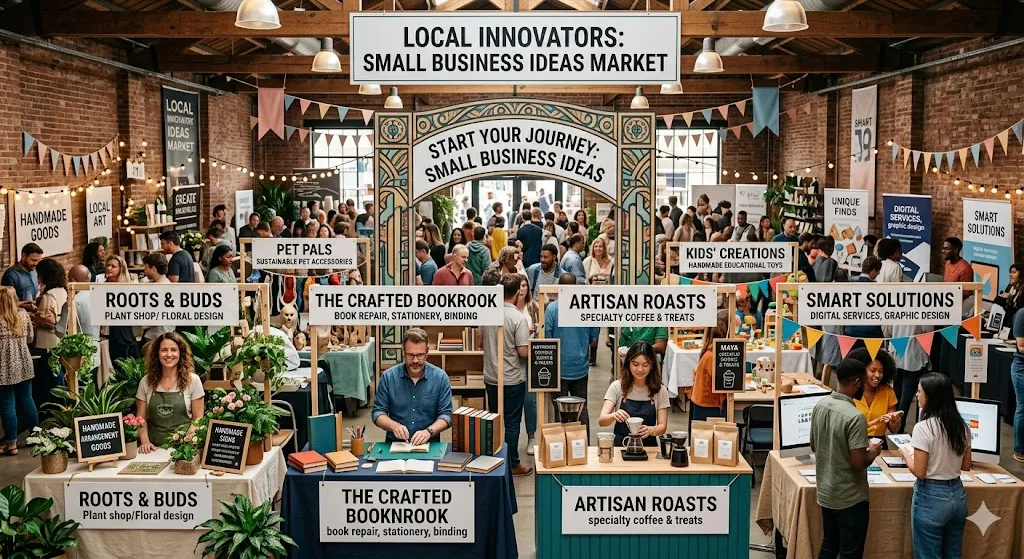
Why Small Business Ideas for Beginners Are Easier to Start
A beginner business should be practical before it is impressive. You want something you can explain in one sentence, offer to real people quickly, and adjust based on feedback. That rules out plenty of flashy ideas that look good in social posts but fall apart in real life.
There is also a mindset piece here. Many first-time founders wait until they feel fully ready, but business rarely works like that. Progress usually comes from starting small, charging for something useful, and letting experience teach you what a course or podcast cannot.
| Business Idea | Startup Cost | Difficulty | Online or Local | Scaling Potential |
|---|---|---|---|---|
| Freelance Writing | Low | Easy | Online | High |
| Pet Sitting | Low | Easy | Local | Medium |
| Print-on-Demand | Medium | Medium | Online | High |
| Tutoring | Low | Easy | Both | Medium |
| Bookkeeping | Medium | Medium | Online | High |
Small Business Ideas for Beginners With Low Startup Costs
1. Freelance writing
If you can write clearly, freelance writing is one of the easiest businesses to start from home. Companies need blog posts, product descriptions, emails, website copy, and social media captions all the time. You do not need to be a famous writer to begin. You need to be reliable, easy to work with, and able to deliver clean copy on deadline.
The upside is a very low barrier to entry. The trade-off is competition. Early on, your work samples matter more than your resume, so creating a few strong sample pieces can help you land your first clients faster.
2. Virtual assistant services
A lot of small business owners are overwhelmed by admin work. They need help with inbox management, calendar scheduling, customer replies, research, data entry, and basic content tasks. That is where a virtual assistant business can fit in.
This is a strong option if you are organized and good at keeping things moving behind the scenes. You can begin with general support, then specialize later in areas like real estate, podcast support, or executive assistance. Specializing often leads to better rates, but general services can be the quickest way to get started.
3. Social media management
Many local businesses know they should post online, but they do not have the time or the plan. If you understand short-form content, basic design tools, and what keeps an audience engaged, social media management can become a solid service business.
This works especially well if you focus on one platform and one type of client at first. For example, helping fitness coaches with Instagram or restaurants with TikTok gives your offer a clearer shape. The risk is that clients may expect instant results, so setting realistic expectations matters from the start.
4. Print-on-demand products
If you like creative work but do not want to hold inventory, print-on-demand can be a beginner-friendly route. You create designs for items like T-shirts, mugs, tote bags, or journals, and a supplier prints and ships them when someone places an order.
It sounds easy, and in some ways it is. But the hard part is standing out. Generic slogans rarely get attention. Niche designs aimed at a specific audience tend to do better, whether that is dog lovers, teachers, runners, or people who enjoy funny office humor.
5. Pet sitting or dog walking
This is one of the most accessible local business ideas if you enjoy animals and want something straightforward. Pet owners often need dependable help during work hours, weekends, or vacations, and trust matters just as much as price.
The startup cost is low, but your reputation is everything. That means showing up on time, communicating clearly, and treating each booking professionally. It may not sound glamorous, yet service businesses like this can grow steadily through word of mouth.
6. Home cleaning services
Home cleaning is not a trendy startup, but it can be one of the more reliable beginner businesses because demand is consistent. Busy professionals, families, older adults, and landlords all need help keeping spaces clean.
This kind of business rewards consistency over creativity. If you do good work and make booking easy, repeat business can come quickly. The trade-off is that it is physically demanding, so it suits people who want a hands-on service rather than a laptop-based business.
7. Tutoring
If you are strong in a school subject, language, music skill, or test prep area, tutoring is a smart way to turn knowledge into income. Parents and adult learners are often willing to pay for one-on-one support that feels personal and effective.
The best part is that you do not need to teach everything. In fact, narrow expertise can help. A math tutor for middle school students or an English conversation coach for beginners is easier to market than a broad promise to help everyone.
8. Handmade products
For people who enjoy making things, selling handmade goods can turn a hobby into a real business. Candles, soaps, jewelry, art prints, baked goods, and personalized gifts are common starting points.
This path works best when you treat it like a business, not just a craft outlet. That means pricing for profit, not just to cover materials. Many beginners undercharge because they focus on being affordable instead of sustainable. A product people love is great, but a product that actually pays you is better.
9. Reselling
Reselling involves sourcing items at a lower price and selling them for a profit. That could mean thrifted clothing, vintage decor, books, sneakers, furniture, or electronics. It is one of the clearest ways to learn basic business skills because you deal with sourcing, pricing, marketing, and margins in real time.
It can be profitable, but it depends heavily on what you can source consistently. A few lucky flips are not the same as a dependable business. Beginners do best when they learn one category deeply instead of trying to resell everything.
10. Personal fitness coaching
If you are already knowledgeable about fitness and enjoy helping people stay accountable, coaching can become a strong service business. This could be in-person training, online coaching, workout planning, or beginner accountability sessions.
Credentials can matter here depending on your niche and where you operate, so this is not the fastest route for everyone. Still, if you already have the background, it can be rewarding and highly referral-driven. People do not just pay for workouts. They pay for structure, motivation, and progress.
11. Basic bookkeeping support
Some small businesses need help staying organized financially but are not ready to hire a full-time employee. If you are detail-oriented and comfortable with numbers, basic bookkeeping support can be a useful service.
This is one of those ideas where trust and accuracy matter more than flashy branding. You may need training depending on what services you plan to offer, but once you build confidence, this can become a stable business with recurring monthly clients.
12. Digital products
Digital products include templates, checklists, planners, guides, worksheets, or simple educational resources people can download instantly. They appeal to beginners because there is no physical inventory and no shipping.
The catch is that creating a product is only half the job. You also need to understand what people actually want to buy. A useful product that solves a specific problem usually performs better than something broad and decorative. Think practical first.
How to Choose the Best Small Business Idea for Your Skills and Budget

The best choice is rarely the one with the most hype. It is usually the one that fits your skills, schedule, budget, and energy level. A side hustle that looks profitable on paper can still be a poor fit if you hate the day-to-day work.
Start by asking a few honest questions. Do you want a service business or a product business? Do you want to work online, locally, or both? Do you need quick cash flow, or can you wait while something grows slowly? Those answers narrow the field fast.
It also helps to think about your current advantages. Maybe you already write well, know how to edit video, have teaching experience, or are known in your neighborhood as the person who can fix, organize, or clean things. Beginner businesses grow faster when they build on something you already do well.
Beginner Entrepreneur Ideas That Work Better When You Start Small
Many beginner entrepreneur ideas fail not because the idea itself is bad, but because people try to build too much too quickly. One of the smartest ways to approach entrepreneurship is to begin with low investment business ideas that allow testing demand before spending significant money.
Some of the strongest first business ideas for beginners include freelance services, tutoring, virtual assistance, content creation, bookkeeping, and local service businesses. These businesses you can start with little money help reduce risk while building real-world experience.
New founders often believe they need a polished website, premium software, or expensive branding before launching. In reality, successful profitable beginner businesses usually begin with a clear service, a simple offer, and direct customer feedback. Small improvements over time create stronger businesses than trying to build everything perfectly from day one.
Home Business Ideas for Beginners and Online Opportunities That Can Grow
Many people looking for home business ideas for beginners want flexibility, lower startup costs, and the ability to build income alongside an existing job. That is why online small business ideas continue growing in popularity.
Freelance writing, social media management, virtual assistance, print-on-demand products, tutoring, digital products, and consulting can all become easy businesses to start from home without major financial investment.
The advantage of starting online is scalability. Some side hustle business ideas remain part-time income streams, while others eventually become scalable small business ideas capable of producing long-term recurring revenue.
A beginner business does not need to stay small forever. Starting lean allows founders to improve systems, refine pricing, and build customer trust before expanding into something larger.
Common Beginner Business Mistakes to Avoid Early
Learning what not to do matters just as much as choosing the right business idea. Many beginners slow growth by making avoidable mistakes that create unnecessary stress or financial pressure.
Common mistakes beginners make include:
- Spending too much before validation
- Pricing too low
- Trying too many business ideas at once
- Ignoring customer feedback
The strongest beginner businesses usually grow through consistency rather than speed. Testing demand before major spending protects cash flow. Pricing properly creates sustainability.
Focusing on one direction builds momentum faster than chasing every opportunity. Most importantly, customer feedback often reveals what improvements matter most.
Building a business is rarely about getting everything right immediately. It is about learning quickly, adjusting intelligently, and creating value people continue paying for over time.
How to Validate a Beginner Business Idea Before Spending Money
You do not need a full brand, expensive logo, or complicated website to test an idea. In most cases, you need an offer, a price, and a way to reach a small group of potential customers.
Try this approach. Pick one idea, define one clear service or product, and test it for 30 days. Offer it to people in your network, local groups, or social channels. Pay attention to what questions people ask, what objections come up, and whether anyone is willing to pay.
That last point matters. Interest is nice, but payment is proof. A beginner business becomes real when someone gives you money for a result they value.
If the first idea does not click, that is not failure. It is useful information. Quotela-style optimism works best when it is grounded in action, and business is no different. Start small, stay observant, and let real demand guide your next move.
A good first business does not need to be the one you keep forever. It just needs to teach you how to sell, serve, and keep going once the nerves wear off.
The best small business ideas for beginners are not always the trendiest. They are practical, affordable, and built around solving real problems. Whether you choose freelance writing, tutoring, virtual assistance, print-on-demand, or another beginner-friendly business, start small and validate demand before investing heavily. Building a business becomes easier when you focus on learning, consistency, and customer value.
Beginner Business Success Comes From Action, Not Perfection
Many first-time entrepreneurs spend too much time waiting for the perfect idea. Strong beginner businesses rarely start perfectly. They improve through testing, customer feedback, and steady execution. Whether you choose freelance writing, tutoring, social media management, or another beginner-friendly business, long-term growth usually comes from starting small and learning consistently.
Frequently Asked Questions
What is the cheapest business to start?
Which beginner businesses make money fastest?
Can I start a business while working full time?
What businesses can I start from home?
What mistakes should beginner entrepreneurs avoid?
Example: Turning a Skill Into a Business
Sarah worked full time in customer support and started freelance writing on weekends. She built sample writing pieces, contacted local businesses, and secured her first two clients through networking groups. Six months later, recurring work replaced part of her salary. The experience showed how beginner businesses often grow through consistency rather than speed.
References & Further Reading
The information presented in this article is grounded in widely recognized research, practical business guidance, and authoritative resources covering small business development, entrepreneurship education, and beginner-friendly income strategies. The following sources are recommended for readers who want to explore specific topics in greater depth.
Small Business & Entrepreneurship Foundations
- Scarborough, N. M., & Cornwall, J. R. (2018). Essentials of Entrepreneurship and Small Business Management. Pearson. A comprehensive academic resource covering how small businesses are started, structured, and grown, with practical frameworks relevant to beginner founders at every stage.
- Gerber, M. E. (1995). The E-Myth Revisited: Why Most Small Businesses Don’t Work and What to Do About It. HarperCollins. A foundational read for anyone starting a small business, exploring the common mistakes beginners make and how to build a business that runs on systems rather than constant personal effort.
- Guillebeau, C. (2012). The $100 Startup: Reinvent the Way You Make a Living, Do What You Love, and Create a New Future. Crown Business. Particularly relevant to this article’s focus on low-cost beginner business ideas, with real case studies of founders who built profitable businesses with minimal startup capital.
Online Authority Resources
- U.S. Small Business Administration (SBA) – sba.gov The most comprehensive government resource for small business owners in the United States, covering business planning, financing options, licensing requirements, and step-by-step guides for starting a business from scratch with limited funds.
- SCORE Mentoring Network – score.org A nonprofit organization supported by the SBA that connects beginner entrepreneurs with experienced volunteer mentors at no cost. Particularly useful for first-time founders who want personalized guidance without paying for expensive coaching programs.
- Entrepreneur Magazine – entrepreneur.com One of the most widely read publications covering small business ideas, startup strategies, and practical growth advice. Their beginner business and side hustle sections are regularly updated with current market opportunities and founder stories.
- Harvard Business Review – Entrepreneurship – hbr.org/topic/subject/entrepreneurship Offers research-backed articles on business validation, pricing strategy, customer development, and the behavioral patterns of successful founders. Useful for readers who want to go deeper on the strategic side of starting a business.
- Kauffman Foundation – kauffman.org A leading research organization focused on entrepreneurship and small business growth in the United States, with data-driven reports on startup success rates, beginner business trends, and the economic impact of self-employment.
Freelancing & Service Business Resources
- Upwork Resource Center – upwork.com/resources Practical guides covering how to start and grow a freelance business, set competitive rates, find first clients, and build a sustainable service-based income. Relevant to several business ideas covered in this article including writing, virtual assistance, and social media management.
- Fiverr Learn – learn.fiverr.com An accessible platform offering beginner-friendly courses on freelance skills including copywriting, graphic design, social media management, and digital marketing, many of which align directly with the business ideas outlined in this article.
Selling & Digital Products
- Shopify Blog – Business Ideas – shopify.com/blog/business-ideas Regularly updated content covering print-on-demand, reselling, handmade products, and digital product businesses, with practical breakdowns of startup costs, platform options, and real founder examples.
- Etsy Seller Handbook – etsy.com/seller-handbook A free resource for anyone interested in selling handmade products, digital downloads, or vintage items, covering everything from product photography and pricing to shop optimization and customer communication.
Validation & Business Mindset
- Ries, E. (2011). The Lean Startup: How Today’s Entrepreneurs Use Continuous Innovation to Create Radically Successful Businesses. Crown Business. The most widely referenced framework for testing business ideas quickly and cheaply before committing significant resources, directly relevant to the validation approach discussed in this article.
- Guillebeau, C. (2016). Born for This: How to Find the Work You Were Meant to Do. Crown Business. A practical resource for beginners trying to identify which business ideas align with their existing strengths, interests, and market demand.
- MindTools – Entrepreneurship Skills – mindtools.com A practical online library covering decision-making, time management, financial awareness, and the soft skills that help beginner entrepreneurs build stronger working habits from the start.
All external resources listed are included for informational and educational purposes. Quotela.net has no commercial affiliation with the organizations, publishers, or platforms referenced above. Readers are encouraged to verify current information directly with each source, as details may change over time.
About the Author
Ana Milojevik is a business writer at Quotela.net who covers small business ideas, entrepreneurship, and practical strategies for people building something of their own.