How AI Procurement Solutions Connect Procurement and Business Teams
In most companies, procurement and business teams are supposed to work closely. In reality, they often operate in parallel lanes. Everyone is busy, everyone has deadlines, and yet simple purchasing decisions can take weeks. The problem usually isn’t the intent; it’s how the work flows.
This is where AI Procurement Solutions are starting to make a real difference, not as a buzzword, but as a practical fix to everyday collaboration issues.
Where Collaboration Usually Breaks Down
Procurement teams are focused on process, compliance, and risk. Business teams are focused on speed and outcomes. Both are valid, but they don’t always align naturally.
Some common friction points show up quickly:
- Requests arrive with missing details
- Approvals depend on long email threads
- Finance and legal are looped in too late
- No one has a clear view of what’s blocked and why
A familiar situation looks like this:
A department submits a request, procurement asks for clarification, finance wants budget confirmation, legal flags contract language, and the business team waits without knowing what’s happening behind the scenes.
Over time, frustration builds on both sides.
The Hidden Cost of Manual Procurement Processes
When collaboration tools are fragmented, the impact goes beyond slow approvals.
- Procurement teams spend hours tracking status instead of advising strategically
- Business teams start bypassing processes just to move faster
- Supplier conversations lose momentum
- Trust between teams slowly erodes
Procurement ends up being seen as a checkpoint instead of a partner.
How AI Procurement Solutions Change the Dynamic
The real value of AI Procurement Solutions isn’t automation alone. It’s a connection.
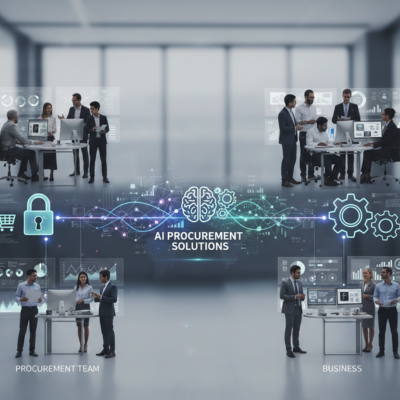
By bringing requests, approvals, and data into one intelligent workflow, AI helps everyone see the same picture.
In practice, that means:
- Requests are structured correctly from the start
- Approval paths are clear and automated
- Stakeholders know exactly where things stand
- Decisions don’t rely on chasing updates
Instead of reacting to issues, teams stay aligned throughout the process.
Faster Approvals Without Losing Control
One concern teams often raise is speed versus governance. AI helps balance both.
When approvals are automated intelligently:
- The right people are involved at the right time
- Low-risk decisions move quickly
- High-impact decisions get proper review
- Nothing falls through the cracks
This consistency builds trust. Business teams feel supported, and procurement maintains control without slowing everything down.
From Day-to-Day Tasks to Strategic Work
Without AI, procurement teams spend much of their time managing tasks that shouldn’t require human attention.
Think about how much effort goes into:
- Following up on approvals
- Updating spreadsheets
- Answering “where is this stuck?” messages
With AI Procurement Solutions handling routine work, procurement professionals can shift focus toward:
- Early involvement in business planning
- Supplier strategy and relationship building
- Risk mitigation and value creation
That shift changes how procurement is perceived across the organization.
Better Workflows Make Better Workdays
Connected workflows don’t just improve outcomes; they reduce daily stress.
For procurement teams, it means:
- Fewer manual handoffs
- Clear accountability
- Less last-minute escalation
For business teams, it means:
- Predictable timelines
- Clear expectations
- Faster decisions
When everyone works from the same system, collaboration feels natural instead of forced.
Why AI-Native Platforms Matter
Many procurement tools were never designed for today’s complexity. AI was added later, often as a feature rather than a foundation.
AI-native platforms are different. They adapt to real workflows and scale with the organization.
This matters because modern enterprises need systems that:
- Learn from decisions over time
- Support cross-functional collaboration
- Handle complexity without added friction
A Practical Example: Levelpath in Action
Some platforms focus specifically on bridging procurement and the business. Levelpath is a good example of this approach.
Built by Alex Yakubovich and Stan Garber, who previously co-founded Scout RFP, Levelpath reflects deep procurement experience. It was designed as an AI-native platform from day one, not retrofitted later.
Powered by its Hyperbridge reasoning engine, Levelpath helps teams move faster while staying aligned. Approvals are streamlined, workflows are connected, and supplier relationships benefit from smoother interactions.
Instead of managing clunky systems, teams spend more time on decisions that actually matter.
AI Procurement Solutions, Explained Simply
At a basic level, AI Procurement Solutions help organizations work smarter by:
- Automating repetitive procurement tasks
- Connecting procurement with finance, legal, and business teams
- Improving visibility across requests and approvals
- Supporting faster, more informed decisions
The goal isn’t replacing people. It’s enabling better collaboration.
Where Levelpath Fits for Modern Enterprises
Levelpath’s AI Procurement Solutions are designed to support:
- Workflow-driven procurement processes
- Real collaboration across departments
- Enterprise-scale operations without added complexity
Aligning technology with how teams actually work it helps procurement become a true business partner.
Final Thoughts
Procurement and business teams don’t struggle because they want different outcomes. They struggle because their tools don’t support collaboration.
Levelpath help close that gap by connecting workflows, improving transparency, and reducing friction. When teams share context and move at the same pace, procurement becomes faster, more strategic, and easier to work with.
Platforms like Levelpath show how AI, when applied thoughtfully, can improve not just processes but everyday work itself.
Related posts:
 TikTok-Famous Food Trends: Viral Recipes and Kitchen Hacks That Took Over 2025
 Making Mistakes Safely: The Smarter Way to Learn Trading with Quotex
 Is the Traditional Classroom Model Still Relevant in the Age of Hybrid Learning?
 Smart Borrowing: Tips for Choosing an Auto Loan You Can Afford
 Unearthing the Past: What is the Oldest City in the World?