Why Time Feels Faster as We Get Older
Almost everyone has felt it: summers that once seemed endless now pass in a blink, years roll by faster than months once did, and suddenly it’s “already” the end of the year again. This strange sensation—that time speeds up as we age—is one of the most common human experiences. But why does it happen? Is time really moving faster, or is our mind changing the way it experiences it?
The answer lies not in clocks or calendars, but in psychology, memory, routine, and the way our brains process life itself.
This video explores the psychology behind why time appears to pass faster as we grow older and whether it’s possible to slow down our perception of time. Sponsored by National Geographic Channel.
Time Is Constant — Our Perception Is Not
Time, as measured by seconds and minutes, never changes. A minute is always sixty seconds, whether you are five or fifty. What changes is how your brain experiences and remembers time.
When we say “time flies,” we are really talking about perceived time, not objective time. Our sense of time is deeply tied to:
- Memory formation
- Novel experiences
- Attention
- Emotional intensity
As these factors change with age, so does our perception of how fast life seems to move.
Childhood: When Time Felt Endless
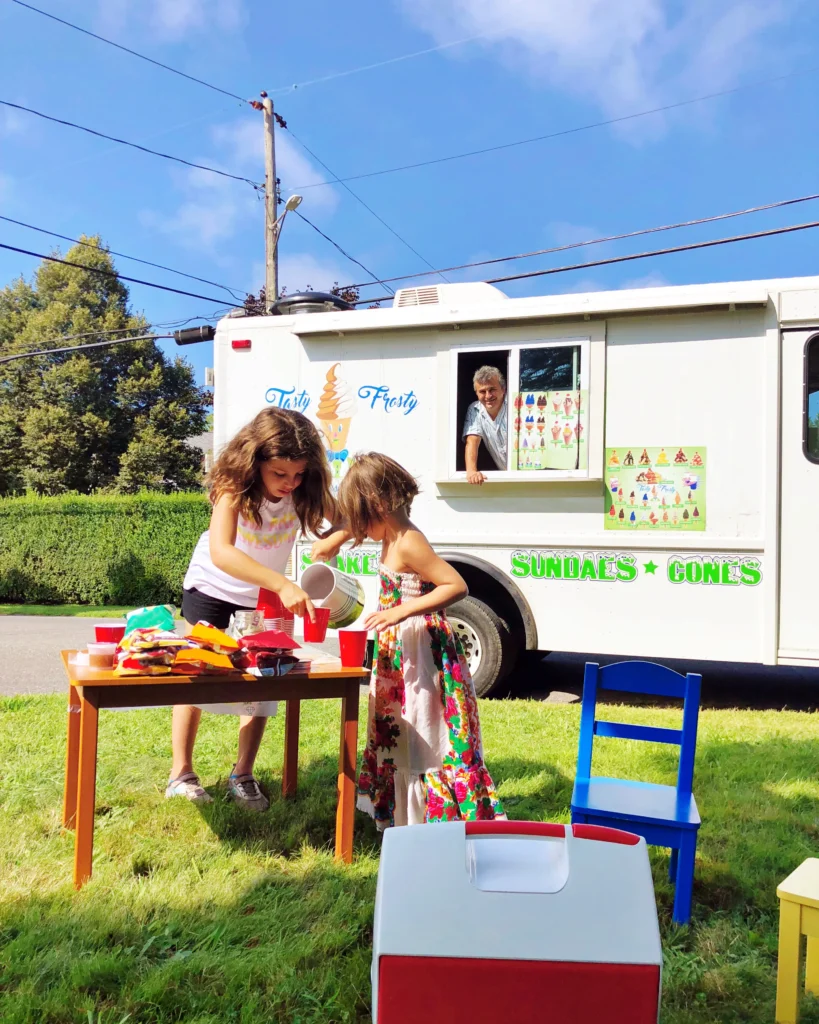
Think back to being a child. A single school day felt long. Waiting for a birthday or holiday felt almost unbearable. Summers seemed to stretch on forever.
This happens because childhood is filled with:
- First-time experiences
- Constant learning
- High emotional engagement
- Intense attention to the present moment
When everything is new, the brain works harder to process and store information. More memories are formed, making periods of time feel longer in retrospect.
The Role of Novelty: New Experiences Slow Time
One of the strongest factors in time perception is novelty.
When you do something new:
- Your brain pays more attention
- You notice details
- You create stronger memories
This makes time feel slower while it’s happening—or at least richer when you look back on it.
As we get older, life often becomes more routine:
- Same routes
- Same schedules
- Similar responsibilities
- Repeating patterns
When days are predictable, the brain compresses them. Fewer new memories are created, and time feels like it “disappears.”
Memory Density: Why Years Feel Shorter
A powerful explanation comes from memory density theory.
When you look back on a period filled with many memories, it feels long.
When you look back on a period with few distinct memories, it feels short.
Childhood and early adulthood are memory-dense. Later years often blur together because many days are similar.
That’s why:
- A single year at age 10 feels huge
- A single year at age 40 can feel invisible
It’s not that less happened—it’s that less stood out.
Proportional Time: Each Year Becomes a Smaller Slice
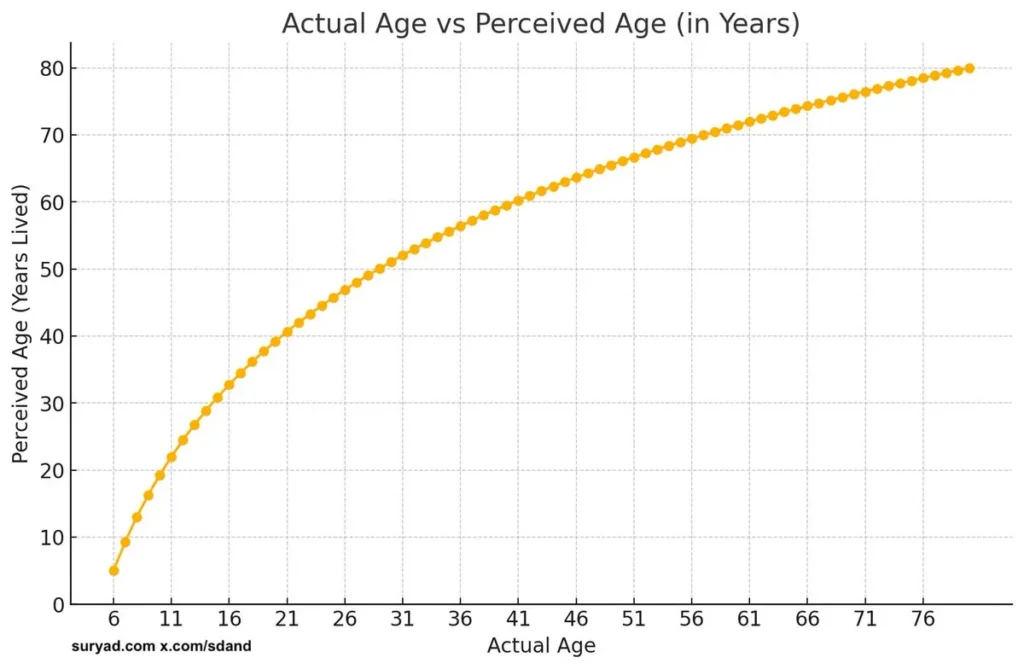
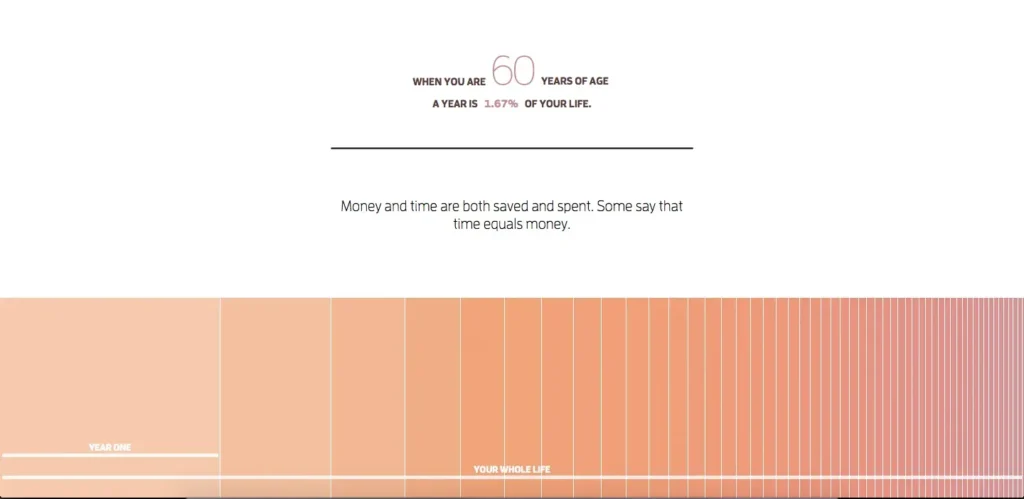
Another simple explanation is relative proportion.
When you are:
- 5 years old → one year is 20% of your life
- 10 years old → one year is 10% of your life
- 50 years old → one year is 2% of your life
Each passing year represents a smaller fraction of your lived experience. Your brain subconsciously compares time to everything that came before, making it feel shorter.
Routine, Responsibility, and Autopilot Mode
As adults, many of us live on autopilot:
- Work
- Chores
- Obligations
- Deadlines
When attention is divided or focused on stress, the brain records fewer details. Days pass without being fully “noticed.”
This is why:
- Busy weeks vanish
- Entire months feel lost
- Time seems to speed up during stressful periods
Attention is the gateway to memory—and memory shapes time.
Emotional Intensity Slows Time
Strong emotions—fear, excitement, love, awe—stretch time.
That’s why:
- Moments of danger feel slow
- First love feels timeless
- Special days feel longer
As we age, emotional experiences often become more regulated and familiar. While this brings stability, it also reduces the intensity that once slowed time down.
Technology and the Acceleration of Time
Modern life adds another layer:
- Constant notifications
- Endless scrolling
- Multitasking
- Digital distractions
Technology fragments attention. When attention is fragmented, memory weakens—and when memory weakens, time feels faster.
Hours disappear online not because they are enjoyable, but because the brain doesn’t store them meaningfully.
Can We Make Time Feel Slower Again?
The good news: yes—at least psychologically.
You can’t stop time, but you can change how you experience it.
Ways to Slow Down Time Perception:
- Seek new experiences (even small ones)
- Change routines intentionally
- Learn new skills
- Travel or explore locally
- Practice mindfulness
- Be fully present during ordinary moments
- Reduce autopilot behaviors
The goal isn’t to do more—but to experience more deeply.
Aging Isn’t the Enemy — Unnoticed Living Is
Time doesn’t speed up because we age.
It speeds up because we stop noticing.
When life becomes predictable, the mind compresses it. When life becomes meaningful, curious, and attentive, time expands again.
Growing older doesn’t have to mean watching life rush by. With intention, presence, and curiosity, even ordinary days can regain depth—and time can feel full again.
The Perception Gap: Childhood vs. Adulthood
| Factor | Childhood (Time Feels Slow) | Adulthood (Time Feels Fast) |
|---|---|---|
| Novelty | High (First-time experiences) | Low (Routine & patterns) |
| Memory Density | Dense (Many unique memories) | Sparse (Days blur together) |
| Proportionality | 1 year is a large % of life | 1 year is a tiny % of life |
| Brain Processing | Deep (Constant learning) | Autopilot (Efficient/Divided) |
Final Thought
Time feels faster as we get older not because life is shorter, but because we experience it differently. The secret to slowing it down isn’t found in clocks—it’s found in attention, memory, and meaning.
If we learn to notice again, time doesn’t disappear.
It opens.
Find more guides and expert tips at our main site.
Visit Quotela.netAbout the Author
Ana Milojevik is a writer and contributor at Quotela.net, a general-interest publication covering business, health, technology, travel, personal development, quotes, and digital trends. She enjoys researching practical topics and creating informative content that helps readers discover new ideas, insights, and useful perspectives.
Related posts:
 How to Improve Decision Making Every Day
 TikTok-Famous Food Trends: Viral Recipes and Kitchen Hacks That Took Over 2025
 Making Mistakes Safely: The Smarter Way to Learn Trading with Quotex
 Is the Traditional Classroom Model Still Relevant in the Age of Hybrid Learning?
 Smart Borrowing: Tips for Choosing an Auto Loan You Can Afford
I’m 45, and I’ve been feeling this ‘acceleration’ so intensely lately. The memory density theory explained here is a total epiphany for me. I realized that my last five years have felt like one long, blurred month because my routine is so rigid. I’ve started taking different routes to work and trying one new hobby every month just to break the autopilot mode. It’s amazing how much longer a week feels when you actually have new memories to anchor it to. This is a vital wake-up call for anyone feeling like life is passing them by!
The point about technology and the acceleration of time is so true. I can spend three hours scrolling on my phone, and it feels like twenty minutes, but I remember absolutely none of it. It’s like those hours just vanish from my life’s ‘timeline.’ I’ve started implementing a ‘no-phone’ rule during my morning coffee to practice mindfulness, and it’s the only part of my day that feels ‘thick’ and meaningful again. Our brains really do need that undivided attention to stretch time out.
I’m in my late 60s, and people always tell me time must be flying by. But I’ve found that learning new skills—I recently took up oil painting and basic coding—has actually slowed things down for me. When you’re a ‘beginner’ at something, your brain is forced to pay attention like a child’s brain does. Aging isn’t the enemy; unnoticed living is. That line really resonated with me. Curiosity is the best way to keep time from ‘compressing’ as we get older.
Slow Morning, Fast Year” Perspective: “It’s so strange how a boring Wednesday at the office can feel like it lasts 100 hours, but then I look back and the last three years of my career have vanished in a blur. This article explains exactly why—routine is the ultimate time-compressor.